

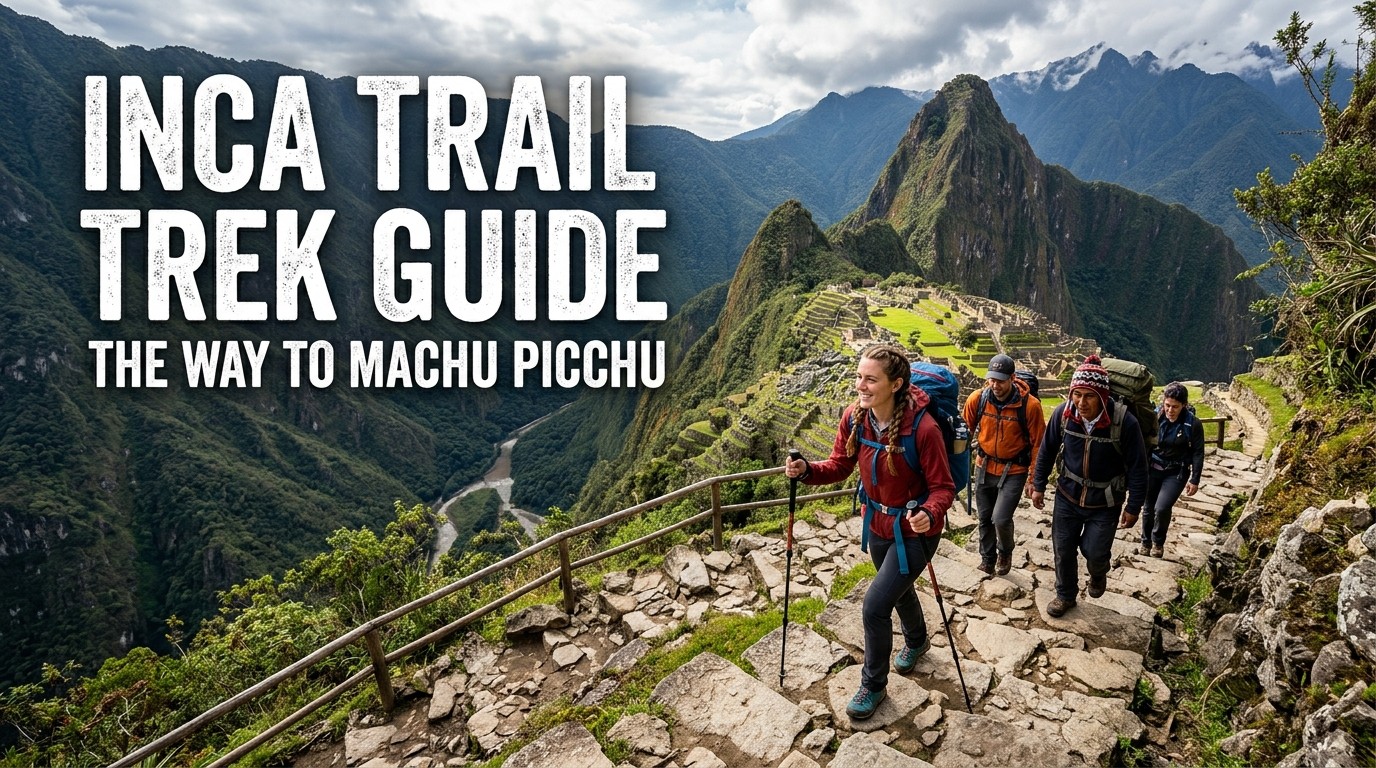
The Inca Trail Trek combines dramatic Andean landscapes, ancient ruins, demanding altitude, cultural history, and careful preparation into an unforgettable journey to Machu Picchu.
The Inca Trail Trek is more than a hike to a famous archaeological site. It is a multi-day journey through changing ecosystems, ancient stonework, mountain passes, cloud forests, and landscapes that gradually reveal why Machu Picchu has fascinated travelers for generations.
For many people, the Inca Trail Trek represents a particular kind of travel freedom: earning the destination through movement rather than simply arriving by vehicle. You wake before sunrise, lace your shoes, shoulder your daypack, and begin walking while the mountains are still wrapped in mist. Some sections are demanding enough to make conversation difficult, while others invite you to stop and look at orchids, terraces, distant peaks, or stone structures hidden in vegetation.
The psychological appeal is just as important as the physical challenge. The Inca Trail Trek creates a sequence of small victories. You finish the first steep climb. You cross another pass. You reach an archaeological site. You make it through an unexpectedly difficult staircase. Then, eventually, the trail delivers you toward Intipunku, the Sun Gate, where the landscape around Machu Picchu begins to emerge.
That progression makes the Inca Trail Trek particularly rewarding for travelers who want an experience rather than simply another photograph.
Why the Inca Trail Is Different From a Normal Hike
An ordinary mountain hike is usually about the landscape, exercise, or reaching a summit. The Inca Trail Trek combines those elements with history, cultural heritage, logistics, and regulated access.
The classic route begins near kilometer 82 at Piscacucho and leads through a network of archaeological sites before reaching Machu Picchu through Intipunku. The SERNANP description of the principal route identifies major places including Patallaqta, Wayllabamba, Runkurakay, Sayaqmarka, Phuyupatamarka, Wiñaywayna, Intipunku, and the Machupicchu citadel. The principal route is listed at approximately 33.7 kilometers and is commonly experienced as a four-day, three-night trek.
That makes the Inca Trail Trek feel like a moving historical journey.
You are not simply passing through wilderness. The stone paths, agricultural terraces, ceremonial structures, and settlements reflect a sophisticated road system developed by the Inca civilization.
The route also crosses several ecological zones. You may move from agricultural valleys into humid forest, then into colder high-altitude terrain, and eventually toward cloud forest and the warmer environment surrounding Machu Picchu.
That diversity is one reason the Inca Trail Trek feels much longer than its numerical distance suggests.
Elevation changes, stairs, humidity, weather, and uneven stone surfaces all influence perceived difficulty. A short distance with repeated climbing can be more demanding than a much longer flat walk.
Is the Inca Trail Trek Difficult?
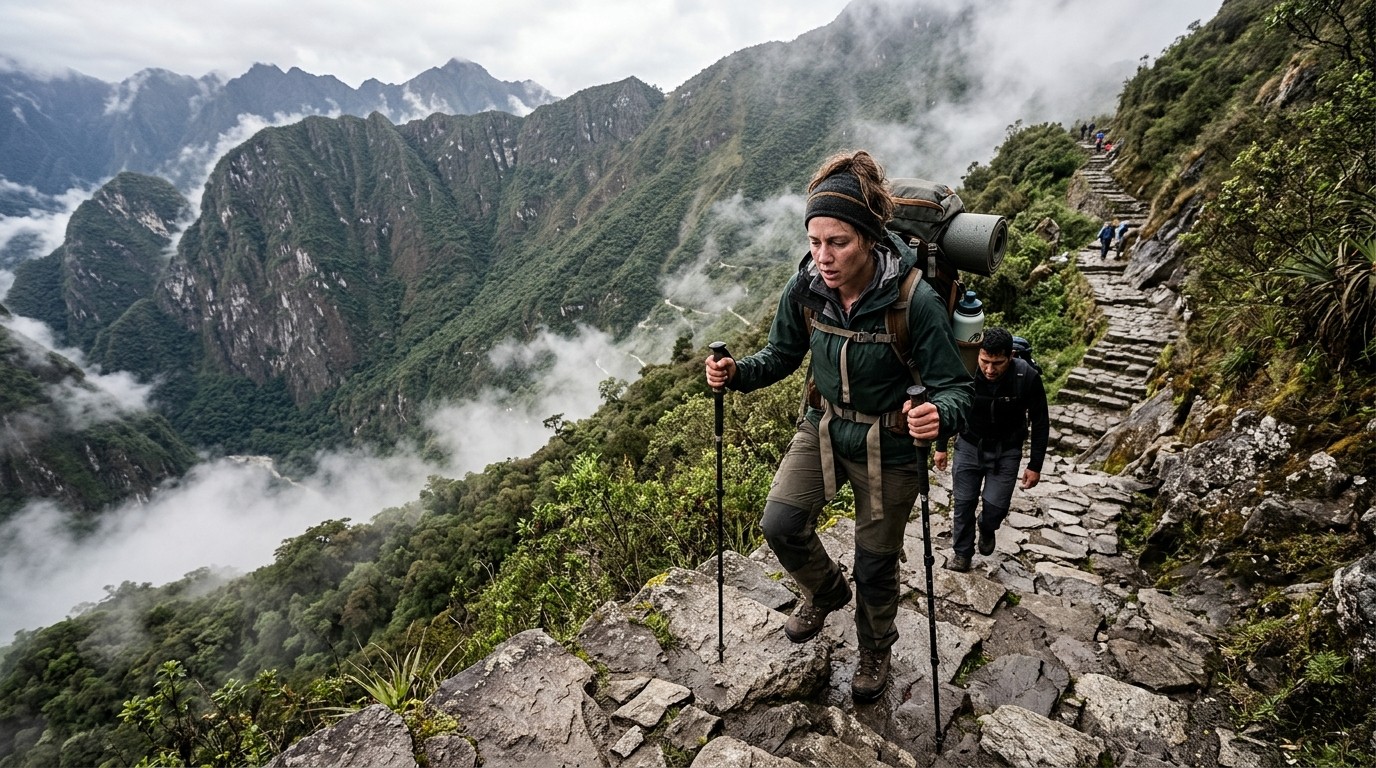
Yes, but difficulty is highly individual.
The Inca Trail Trek is not normally considered a technical mountaineering expedition. You do not generally need climbing equipment or advanced mountaineering skills. However, you should be comfortable walking for several consecutive days while carrying a daypack and dealing with substantial elevation changes.
The biggest physical challenge is often the combination of altitude and stairs.
Many travelers prepare by focusing heavily on cardio while underestimating leg endurance. Yet the Inca Trail Trek repeatedly asks your quadriceps, calves, hips, and stabilizing muscles to work uphill and downhill.
Descending can be surprisingly difficult.
A traveler may feel excellent after climbing a pass, only to discover that several hours of stone stairs produce intense fatigue in the knees and thighs.
Your training should therefore include more than running.
What Makes the Trail Physically Demanding?
The Inca Trail Trek typically challenges you through five factors:
| Challenge | Why it matters | Preparation priority |
|---|---|---|
| Altitude | Reduces exercise capacity and can cause altitude illness | Acclimatization |
| Steep climbs | Raises heart rate quickly | Incline walking |
| Descents | Puts stress on knees and thighs | Stair training |
| Repeated days | Fatigue accumulates | Back-to-back hikes |
| Variable weather | Changes comfort and footing | Layered clothing |
The key lesson is that the Inca Trail Trek rewards consistency rather than speed.
You do not need to be the fastest person in your group. You need to keep moving at a sustainable pace.
Many experienced trekking guides use the principle of slow, steady progress because excessive effort early in the day can create problems later.
How Fit Do You Need to Be?
A person who can comfortably walk for several hours, hike regularly, and recover reasonably quickly can often build the necessary fitness with structured preparation.
The Inca Trail Trek becomes much more manageable when you begin training several months ahead instead of attempting to create fitness during your vacation.
A practical target is to gradually build toward longer hikes with elevation gain.
Practice walking uphill while carrying a daypack. Include stairs. Add occasional back-to-back hiking days so your body learns what it feels like to wake up tired and walk again.
Altitude: The Challenge You Should Respect Most
Altitude deserves special attention because fitness alone does not eliminate altitude-related problems.
Cusco itself sits at high elevation, and the Inca Trail Trek climbs considerably higher. The most demanding point of the classic route is Warmiwañuska, commonly known as Dead Woman’s Pass.
The exact experience varies significantly between travelers. Some people feel headache, fatigue, shortness of breath, poor sleep, reduced appetite, or nausea even when they are otherwise fit.
That is why acclimatization should be considered part of your itinerary rather than an optional extra.
Spend time at altitude before starting the trek. Avoid arriving in Cusco immediately before your first trekking day whenever possible.
The best Inca Trail Trek preparation often happens before you reach the trailhead.
How to Acclimatize
A common strategy is to spend several days in the Cusco region before beginning the trek.
Use those days for gentle activity rather than intense workouts.
Walk around slowly. Drink fluids. Sleep adequately. Eat regular meals. Avoid turning arrival day into an exhausting sightseeing marathon.
The purpose is not to prove that you are already comfortable at altitude.
The purpose is to give your body time to adapt.
People respond differently to altitude, and no training plan can guarantee immunity from altitude sickness. Serious symptoms require appropriate medical assessment rather than simply pushing through.
For that reason, the Inca Trail Trek should never be treated as a test of toughness.
Best Time of Year to Hike
Seasonality significantly influences the experience.
SERNANP describes April through October as the recommended visiting season for the Historic Sanctuary of Machupicchu and identifies November through March as the rainy season. Conditions can vary, but the distinction is useful when planning a trek.
The Inca Trail Trek is generally associated with the drier season because trails may be easier to manage and visibility can be better.
However, dry-season popularity creates another issue: demand.
Popular dates can sell out far in advance.
The trail also closes during February for maintenance and conservation. MINCETUR information confirms that the Inca Trail is closed throughout February and that access is tightly regulated.
So there is no universally perfect month.
June, July, and August can offer attractive weather but also bring higher demand. Shoulder months may provide an appealing balance, depending on your priorities.
The Inca Trail Trek is therefore best scheduled around both weather and availability.
Permits and Why You Cannot Simply Show Up
One of the most important facts about the route is that independent walk-up access is not the normal system.
SERNANP states that visitors to the Historic Sanctuary must use authorized tourism operators and provides a list of agencies authorized for access to the Inca Trail network.
This means the Inca Trail Trek requires advance planning.
The Ministry of Culture updated the trail’s carrying-capacity rules in 2025. Under the amended regulation, routes 01, 02, 03, and 04 have a daily capacity of 500 users, route 05 has 250, and route 06 has 100, subject to future adjustments based on infrastructure, services, impact assessments, and conservation management.
Do not interpret 500 as 500 tourists.
The limit is a regulated capacity that includes users and support personnel under the applicable route rules.
This matters because demand for the Inca Trail Trek can be significantly greater than the number of available spaces.
How Far in Advance Should You Book?
For highly desired travel periods, booking several months ahead is sensible.
MINCETUR’s current visitor information recommends making reservations several months ahead, especially during the dry season when demand is stronger.
The earlier you make decisions, the more flexibility you have around:
- Trek departure date
- Operator selection
- Group size
- Accommodation in Cusco
- Post-trek Machu Picchu plans
- Return transportation
This is one reason the Inca Trail Trek rewards travelers who plan before purchasing flights.
Choosing a Trek Operator
Because authorized operators are part of the access system, choosing the right company is a major decision.
Do not select purely on the cheapest advertised price.
Compare what is included.
A reputable Inca Trail Trek operator should clearly explain permits, guide services, meals, camping arrangements, porter logistics, transportation, emergency procedures, and what you personally need to carry.
Ask how the company handles emergencies.
Ask whether the group has an appropriate guide-to-traveler ratio.
Ask whether the operator follows porter-welfare and conservation standards.
Ask what happens if weather, illness, or trail conditions interrupt the itinerary.
Transparency is a positive sign.
Questions to Ask Before Booking
| Question | Why you should ask |
|---|---|
| Is the operator officially authorized? | Access is regulated |
| Does the price include the trail permit? | Avoid unexpected costs |
| What equipment is supplied? | Prevent duplicate packing |
| How is emergency transport handled? | Important in remote terrain |
| How many travelers are in the group? | Affects experience |
| Are porters included? | Impacts pack weight |
| What meals are provided? | Important for energy planning |
| What happens if I become ill? | Clarifies contingency plans |
A professional operator should answer these questions without making you feel difficult.
The Classic Four-Day Route
The four-day route is the version most travelers picture when they think about the Inca Trail Trek.
The itinerary can vary by operator, campsite availability, weather, and current regulations, but a classic structure looks broadly like this.
Day 1: Piscacucho to Wayllabamba Area
The journey usually begins at kilometer 82.
The first day can feel deceptively easy because excitement is high and your legs are fresh.
Do not use that enthusiasm as a reason to race.
The Inca Trail Trek becomes easier when you protect energy from the beginning.
You will encounter archaeological remains, agricultural landscapes, river scenery, and gradually increasing elevation.
Use the first day to establish your walking rhythm.
Keep your pack organized.
Drink regularly.
Eat even if excitement reduces your appetite.
Most importantly, learn what pace feels sustainable.
Day 2: The Big Climb
Day two is commonly regarded as the physically hardest section.
The route climbs toward Warmiwañuska, the highest point of the classic trail.
This is where the Inca Trail Trek becomes a genuine test of patience.
You may see people moving quickly at the beginning and then struggling later.
Do not chase their pace.
Take controlled steps.
Use trekking poles if appropriate.
Pause briefly before you become completely exhausted rather than waiting until your body forces you to stop.
Reaching the pass can create an emotional high because you know you have completed the major ascent.
But remember that the day is not finished.
The descent still requires concentration.
Day 3: Archaeology and Mountain Drama
Day three is often considered the most visually rewarding.
After the major pass, the landscape becomes a dramatic combination of cloud forest, stone pathways, mountains, and archaeological sites.
Sites such as Runkurakay, Sayaqmarka, and Phuyupatamarka form part of the route described by SERNANP.
The Inca Trail Trek becomes less about fighting elevation and more about absorbing the environment.
Yet day three can still be long.
Fatigue from previous days changes your perception of distance.
The stairs may suddenly feel steeper.
Your feet may develop hot spots.
Your shoulders may complain about your pack.
This is where good preparation pays off.
Day 4: Wiñaywayna and Intipunku
The final morning can carry a strange mixture of excitement and fatigue.
One of the highlights is usually Wiñaywayna, an impressive archaeological complex located along the route.
From there, walkers continue toward Intipunku.
The Sun Gate is emotionally significant because it provides the classic trail arrival toward Machu Picchu.
The Inca Trail Trek has been gradually preparing you for this moment.
You have already crossed mountains, forests, stairways, and ruins.
Now the destination becomes visible.
That transition is one reason the route feels more meaningful than simply taking a transport connection to Machu Picchu.
What to Pack
The best packing strategy for the Inca Trail Trek is controlled minimalism.
Every unnecessary item becomes weight.
A useful setup typically includes a daypack, comfortable hiking clothes, weather layers, durable footwear, sun protection, water capacity, personal medication, basic toiletries, and essential electronics.
Exact equipment depends on your operator because tents, sleeping bags, mats, meals, and other supplies may be provided or rented.
Always confirm included equipment before packing.
Clothing Strategy
Think layers instead of bulky single-purpose clothing.
A practical system may include:
- Breathable base layer
- Lightweight hiking trousers
- Warm mid-layer
- Waterproof shell
- Comfortable sleeping clothes
- Several pairs of hiking socks
- Hat or sun protection
- Warm layer for cold evenings
The Inca Trail Trek can move through markedly different temperatures during the same day.
Morning may be cold.
Midday can feel hot.
Cloud and rain can arrive unexpectedly.
Being able to add or remove layers is therefore more useful than packing one massive jacket.
Footwear
Footwear deserves early experimentation.
Do not bring brand-new boots to Peru and assume they will be comfortable.
Break them in before departure.
Your shoes should provide reliable grip, stability, and enough comfort for long hours on uneven stone.
Some travelers prefer lighter hiking shoes, while others prefer boots.
The right answer depends on your feet, ankle stability, experience, and conditions.
Trekking Poles: Worth It?
For many travelers, yes.
The Inca Trail Trek includes extensive stair sections and uneven descents.
Poles can help reduce the feeling of instability and provide additional support on steep sections.
They are not mandatory for every traveler, but they can be especially useful for people who are cautious about knees, balance, or slippery terrain.
If you use poles, practice with them before the trip.
A trekking pole you cannot use efficiently can become more annoying than helpful.
Water and Hydration
Hydration becomes particularly important when combining altitude, exertion, sun exposure, and multiple trekking days.
Ask your operator how water is supplied along the route.
Carry enough capacity to comfortably manage the periods between refills.
Do not wait until you are extremely thirsty.
At the same time, avoid forcing huge quantities of water simply because someone told you that more is always better.
Your hydration plan should consider food, weather, exertion, and professional guidance.
The Inca Trail Trek is physically demanding enough that fueling and hydration can influence the difference between a challenging day and a miserable one.
Food on the Trail
Most organized trips provide meals, and the exact menu depends on the operator.
Meals are usually designed to deliver enough carbohydrates, protein, and calories for several days of sustained activity.
Your goal is not gourmet dining.
Your goal is consistent energy.
Tell your operator about allergies, dietary restrictions, or medical needs before departure.
Bring familiar snacks that you know you tolerate well.
Easy options can include energy bars, dried fruit, nuts, chocolate, or other compact foods.
Do not suddenly experiment with exotic supplements during a demanding trek.
A Simple Training Plan
A good Inca Trail Trek preparation program should progressively develop cardiovascular endurance, leg strength, balance, and hiking-specific durability.
Twelve to Sixteen Weeks Before
Start with regular walking or hiking.
Build consistency before intensity.
If you are currently sedentary, begin conservatively and increase your workload gradually.
Eight to Twelve Weeks Before
Add hills, stairs, or treadmill incline.
Begin carrying a light daypack.
Introduce longer weekend walks.
Four to Eight Weeks Before
Include longer hikes and occasional consecutive hiking days.
Practice using your footwear and equipment.
Test your snack and hydration routine.
Final Two Weeks
Reduce extreme training volume.
The goal is to arrive recovered rather than exhausted.
The best Inca Trail Trek training program is not the one that produces the biggest workout numbers.
It is the one that helps you arrive healthy and confident.
Training for Stairs
Stairs deserve special emphasis.
Repeated stair climbing closely resembles the muscular demand of portions of the route.
You can train on outdoor stairs, stadium steps, gym stair machines, or steep local paths.
Begin with manageable sessions.
Gradually increase total climbing time.
Include controlled descents because downhill movement taxes different muscles.
The Inca Trail Trek is often remembered as a climb, but the descending sections can be just as physically demanding.
What to Expect Mentally
The psychological experience deserves more attention than it usually receives.
The first day can feel exciting.
The second can feel intimidating.
The third can feel surreal.
The final day can feel emotional.
That emotional fluctuation is normal.
The Inca Trail Trek is a concentrated experience. You leave the rhythm of ordinary life and enter a repetitive cycle of walking, eating, sleeping, waking, and walking again.
That simplicity can be powerful.
There are fewer distractions.
You become aware of your breathing.
You notice the texture of the trail.
You start recognizing the rhythm of your group.
You may become fascinated by tiny details you would normally ignore.
Solo Travelers on the Inca Trail
The Inca Trail Trek can work very well for people traveling alone because regulated group trekking naturally creates social opportunities.
That is different from being trapped in a group.
You can socialize when you want and step back when you need quiet.
Someone experienced with USA Solo Travel may already understand the confidence that comes from handling transportation, dining, and unfamiliar environments alone.
A traveler who has mastered Solo Travel New York City may also bring useful skills such as awareness, adaptability, and independent decision-making.
Those experiences can complement the slower, more physical rhythm of the Andes.
Global Travel teaches another useful lesson: expectations must adapt to local systems rather than assuming everything will operate like home.
Likewise, experience with Dolomites Hiking can create useful familiarity with mountain preparation, but Peru brings its own altitude, climate, terrain, culture, and regulations.
The Inca Trail Trek is therefore an excellent challenge for an already independent traveler.
How to Manage Fear Before the Trek
Fear often begins before the journey.
People worry about altitude.
They worry about not being fit enough.
They worry about rain.
They worry about sleeping outdoors.
They worry that everyone else will be stronger.
The solution is not to eliminate uncertainty.
The solution is to convert uncertainty into preparation.
Research the route.
Train gradually.
Choose an experienced operator.
Arrive early for acclimatization.
Pack intelligently.
Understand your limits.
The Inca Trail Trek does not require you to become a different person before you start.
It asks you to prepare the person you already are.
Respecting Inca Heritage
The route is not an adventure playground.
It is part of a culturally and historically significant landscape.
Stay on designated paths.
Do not climb archaeological structures.
Do not remove stones, plants, artifacts, or anything else from the environment.
Follow guide instructions.
Respect local communities and workers.
Avoid loud behavior around archaeological sites.
The Inca Trail Trek is more meaningful when you understand that the landscape is connected to living cultural traditions, not merely a background for social-media content.
Responsible behavior also protects the route for future visitors.
Environmental Responsibility
Mountain ecosystems can be fragile.
Carry your waste.
Use refill systems appropriately.
Avoid disposable products where possible.
Do not feed wildlife.
Respect restrictions around water sources.
Use designated bathroom facilities and follow operator instructions.
Sustainable trekking is not just an environmental principle.
It improves your own experience.
A cleaner trail feels more immersive.
Fewer careless behaviors mean less damage to the landscapes travelers have come to admire.
Reaching Machu Picchu
One of the biggest planning mistakes is assuming your Inca Trail permit automatically solves every Machu Picchu entry detail.
The 2026 system contains specific rules governing admission routes and capacity.
The Ministry of Culture has established a 2026 maximum capacity of 5,600 daily visitors on designated high-demand dates, with detailed capacity distributed among specific circuits and routes. Tickets are sold through the official TuBoleto platform.
More importantly for trekkers, a regulation introduced in late 2025 provides a specific mechanism for visitors coming from the Inca Trail to access a designated Machupicchu circuit, with a limited number of spaces reserved for Camino Inka visitors that must be reserved and paid through authorized agencies.
Therefore, ask your operator exactly which Machu Picchu admission is included with your trek.
Do not assume that your hiking permit automatically equals unlimited flexibility inside the citadel.
The Inca Trail Trek ends physically at Machu Picchu, but your visitor experience still depends on the entry route and time you have booked.
TuBoleto and Current Ticket Planning
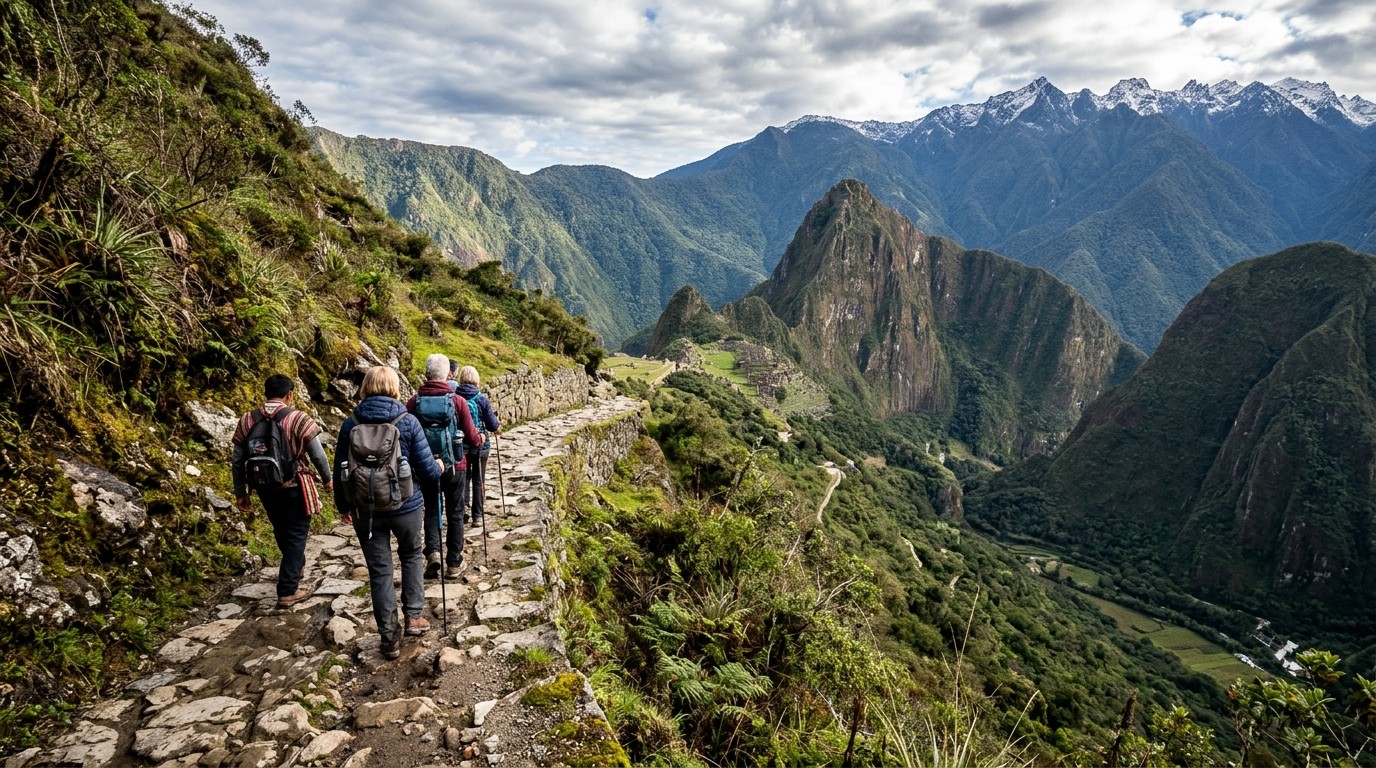
The Ministry of Culture’s official ticket service currently directs visitors to Tuboleto.cultura.pe for Machupicchu ticket purchases. The system requires identification information and lets visitors select circuits, routes, dates, times, and visitor origin.
A major development in 2026 is the effort to integrate protected-area access into the same electronic system. In July 2026, Peru’s Ministry of Environment announced an agreement with the Ministry of Culture to incorporate the entrance fee for the Historic Sanctuary into TuBoleto, with the goal of improving conservation funding, visitor-flow management, and essential services.
This means travelers should verify the current purchasing process close to departure.
Rules and ticket systems can evolve.
Do not copy a 2024 itinerary from a blog and assume it still reflects the 2026 system.
Day After the Trek: Do Not Overplan
After completing the Inca Trail Trek, give your body recovery time.
You may feel energetic immediately after seeing Machu Picchu because adrenaline is high.
Then fatigue can arrive.
Walking through Machu Picchu, navigating transport, carrying luggage, and catching a train can feel surprisingly tiring after several trekking days.
A relaxed evening in Machu Picchu Pueblo or another appropriate base can be a better option than immediately starting another physically demanding activity.
Recovery is part of the journey.
Common Mistakes to Avoid
Booking Too Late
Limited capacity is real.
Do not finalize flights before considering whether your desired trekking date is available.
Arriving in Cusco and Trekking Immediately
Your body may need time to adapt to altitude.
Training Only With Running
Running can improve cardiovascular fitness, but it does not fully prepare your legs for long stair sections and repeated descents.
Carrying Too Much
Pack weight directly influences comfort.
Ignoring Foot Problems
Hot spots become blisters.
Deal with irritation early.
Going Too Fast
The trail rewards steady energy, not speed.
Assuming Good Weather
Mountain weather can change.
Carry appropriate layers.
Treating the Archaeological Sites as Backdrops
Respect the heritage and follow access rules.
Failing to Confirm What Your Operator Includes
Know exactly what your price covers.
A Practical Pre-Trek Planning Timeline
Four to Six Months Before
Research operators.
Choose your preferred travel dates.
Check availability.
Book important reservations.
Start structured training.
Two to Three Months Before
Finalize equipment.
Continue hiking with elevation.
Review acclimatization plans.
Organize travel insurance and documentation.
One Month Before
Test your footwear.
Confirm operator details.
Review baggage arrangements.
Check current Machu Picchu admission requirements.
One Week Before
Review weather.
Confirm departure times.
Organize your documents.
Prepare medication and personal supplies.
The Day Before
Pack your daypack.
Charge electronics.
Hydrate normally.
Eat familiar food.
Avoid exhausting sightseeing.
Sleep.
How Much Money Should You Budget?
Costs vary considerably depending on operator quality, group size, services, gear rental, porter arrangements, accommodation, transportation, and season.
Instead of trying to identify one universal price, separate the budget into categories:
| Category | Examples |
|---|---|
| Trek package | Permit, guide, camping, meals |
| Gear | Sleeping bag or poles if rented |
| Accommodation | Cusco and post-trek nights |
| Transportation | Airport, trailhead, trains, buses |
| Food | Meals outside the trek |
| Tips | Guides, porters, support staff |
| Insurance | Trekking and emergency coverage |
| Personal spending | Snacks, souvenirs, activities |
The cheapest package is not always the best value.
Consider what you receive for the money and how the company treats workers and manages safety.
A slightly higher price can be worthwhile when it means clearer logistics, better support, smaller groups, or stronger contingency planning.
Insurance for the Trek
Travel insurance deserves serious attention because a mountain itinerary involves different risks from ordinary city travel.
Before purchasing a policy, read the actual wording.
Check whether hiking at your planned elevation is covered.
Check whether emergency medical treatment, evacuation, trip interruption, delayed transportation, and baggage problems are included.
Do not assume generic “adventure travel” coverage automatically covers everything.
Keep digital and printed copies of important policy information.
The Inca Trail Trek is exactly the kind of trip where reading the fine print before departure is easier than arguing about coverage during an emergency.
Photography Tips Without Slowing Yourself Down
Photography is one of the pleasures of the route, but constant camera use can interfere with the experience.
Choose a lightweight setup.
Keep your phone or camera easy to reach.
Protect electronics from rain.
Use a small dry bag or waterproof pouch.
Take photographs when safe rather than walking while staring through a screen.
The best Inca Trail Trek photographs are often created by patience rather than expensive equipment.
Clouds moving over mountains.
Light hitting stone walls.
A trail disappearing around a bend.
The quiet expression of a fellow traveler.
Those images communicate the journey better than endlessly photographing the same destination.
The Real Meaning of the Journey
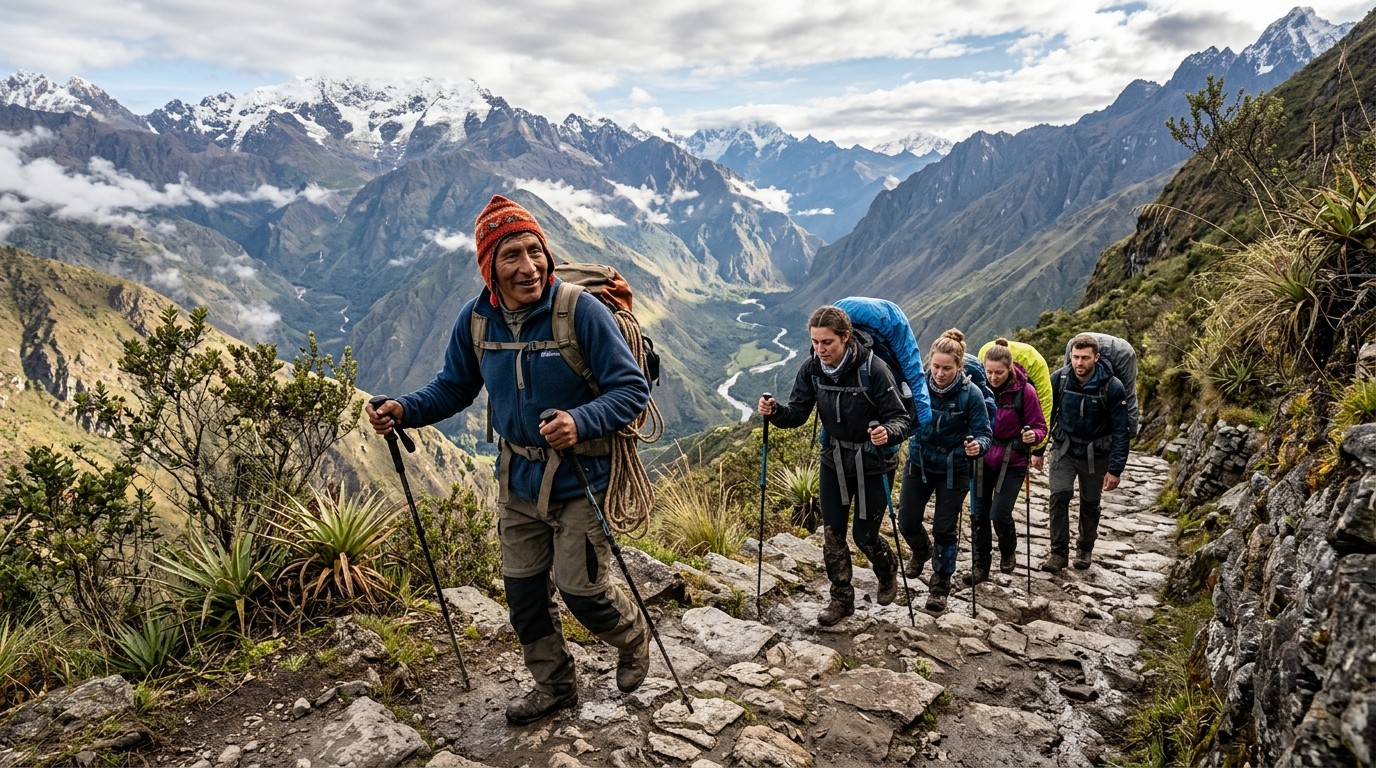
Machu Picchu is the visual destination, but the trail is the story.
That is the deeper reason the Inca Trail Trek remains so powerful.
You experience gradual transformation.
At the beginning, you think about kilometers.
Later, you think about the next pass.
Then the next meal.
Then the campsite.
Eventually, you are simply walking.
That narrowing of attention can become strangely peaceful.
Modern life encourages constant notifications and rapid transitions.
A multi-day trek removes much of that noise.
Your day becomes physical and immediate.
You feel tired because you walked.
You feel hungry because you spent energy.
You appreciate shelter because you slept outside.
You appreciate a hot meal because you earned it.
That simplicity can remain with you long after Machu Picchu is behind you.
Final Preparation Checklist
Before departure, make sure you have:
- Valid passport and required travel documents
- Confirmed trek reservation
- Confirmed authorized operator
- Confirmed Machu Picchu entry arrangement
- Appropriate travel insurance
- Broken-in hiking footwear
- Layered clothing
- Rain protection
- Sun protection
- Reusable water capacity
- Personal medications
- Basic blister care
- Comfortable daypack
- Portable battery
- Copies of essential documents
- Emergency contact information
The strongest Inca Trail Trek preparation is not about owning the most equipment.
It is about eliminating avoidable problems.
Conclusion
The Inca Trail Trek is a demanding but deeply rewarding path to Machu Picchu, combining endurance, altitude, archaeology, mountain scenery, and cultural heritage into one continuous experience. Success depends less on speed than preparation, patience, acclimatization, sensible packing, and respect for official regulations. Book through authorized channels, confirm current entry arrangements, train your legs for climbing and descending, and leave enough time in Cusco to adjust to altitude. Most importantly, treat the route as both a physical journey and a protected cultural landscape. When preparation meets patience, every difficult staircase becomes part of the story rather than something standing between you and the destination.
Frequently Asked Questions (FAQ)
1. How long does the Inca Trail Trek take?
The classic principal route is commonly completed over four days and three nights. SERNANP identifies the principal route from Piscacucho near kilometer 82 and lists a recommended duration of four days and three nights.
2. How difficult is the Inca Trail Trek?
The route is physically demanding because of altitude, steep climbs, long descents, stone steps, and consecutive trekking days. It is not generally technical mountaineering, but you should train specifically for hiking and elevation.
3. Do I need a permit for the Inca Trail?
Yes. Access is regulated and visitors must use authorized operators with the required reservations. Current Peruvian regulations limit daily capacity on the different trail routes.
4. Can I hike the Inca Trail independently without a guide?
The regulated system requires visitors to access the Inca Trail through authorized tourism operations, so independent walk-in trekking is not the standard permitted model. SERNANP provides information on authorized operators.
5. When does the Inca Trail close?
The trail closes throughout February for maintenance and conservation work. MINCETUR’s current tourism information confirms the February closure.
6. What is the best month for the Inca Trail Trek?
April through October is generally considered the recommended period, while November through March corresponds to the wetter season. Conditions vary, so travelers should still review current forecasts and operator guidance.
7. Is altitude sickness common on the trail?
Altitude affects people differently. Because Cusco and parts of the route are high above sea level, acclimatization is important. Arriving several days before trekking can give your body more opportunity to adapt.
8. What should I carry during the Inca Trail Trek?
Carry essential personal items such as water, layers, rain protection, sun protection, medication, basic personal supplies, and a small amount of clothing in your daypack. Your operator should tell you which shared equipment is supplied.
9. Does the Inca Trail permit automatically include Machu Picchu entry?
You should not assume that it does in every practical sense. Current rules provide specific arrangements for visitors arriving from the Inca Trail, including limited spaces allocated for Camino Inka visitors. Ask your authorized agency exactly which Machupicchu circuit and admission are included.
10. Is the Inca Trail worth the effort?
For travelers who enjoy history, hiking, landscapes, and immersive experiences, it can be exceptionally rewarding. The combination of archaeological sites, changing ecosystems, physical challenge, and arrival through Intipunku creates an experience that is fundamentally different from simply visiting Machu Picchu by train.




Leave a Reply