

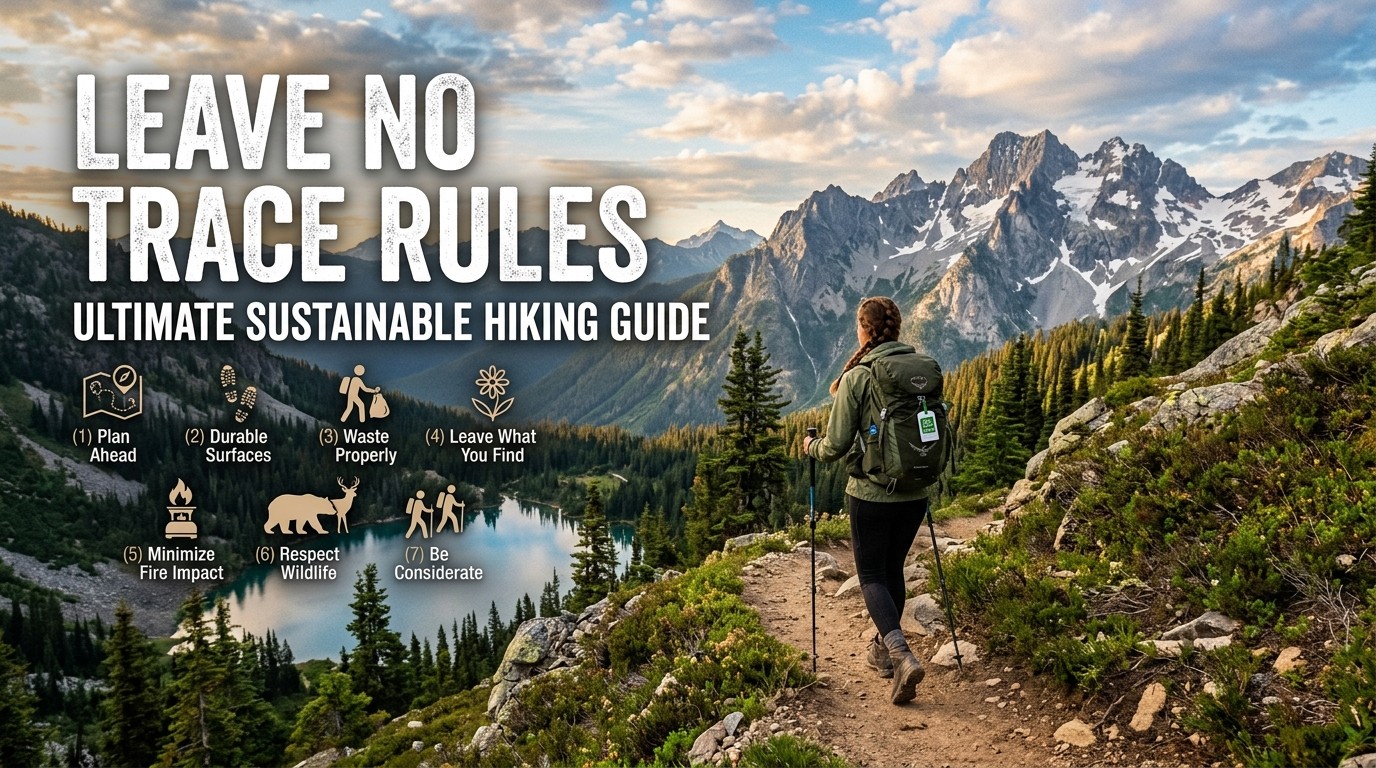
Leave No Trace Rules help hikers protect wild places by traveling lightly, camping carefully, and making decisions that keep nature clean, quiet, and resilient. Leave No Trace Rules also make better hikers, because they build awareness and discipline.
Leave No Trace Rules are more than a checklist. They are a mindset that helps every hiker reduce pressure on trails, campsites, rivers, and wildlife habitats. When people move through nature with care, they help preserve the places they came to enjoy. That matters whether you are walking a short local trail, planning a weekend backpacking trip, or organizing a longer mountain journey. Leave No Trace Rules give you a practical way to enjoy the outdoors without turning beauty into damage.
Many hikers think environmental responsibility is only about picking up litter. In reality, it begins before you leave home. It includes route choice, packing discipline, campsite selection, food storage, noise control, and your willingness to adapt when a trail is too fragile or crowded. Leave No Trace Rules also improve the quality of the trip itself. When you travel more thoughtfully, you notice more detail, move more safely, and feel more connected to the landscape.
The core idea behind the principles
At the heart of Leave No Trace Rules is a simple idea: enjoy wild places without leaving visible, lasting harm. The best outdoor ethic is not about perfection. It is about reducing avoidable impact again and again until good habits become automatic. Leave No Trace Rules work because they are practical. They turn a vague idea like “be respectful” into specific actions hikers can actually follow.
These rules are also psychologically effective. People are more likely to protect something when they feel responsible for it. A clean campsite, an undisturbed trail, or a quiet wildlife viewing moment creates a sense of stewardship. Leave No Trace Rules encourage that feeling by showing hikers that even small decisions matter. A single shortcut can widen a trail. One careless snack wrapper can become litter. One noisy campfire can disturb wildlife and other visitors. The point is not guilt, and Leave No Trace Rules are not about perfection. The point is awareness.
The seven principles in plain language
| Principle | What it means | Why it matters |
|---|---|---|
| Plan ahead and prepare | Know the area, weather, rules, and risks | Prevents accidents and poor decisions |
| Travel and camp on durable surfaces | Stay on established paths and campsites | Protects fragile soil and plants |
| Dispose of waste properly | Pack out trash and handle human waste correctly | Keeps land and water clean |
| Leave what you find | Do not remove rocks, plants, or cultural items | Preserves the place for others |
| Minimize campfire impacts | Use stoves when possible and keep fires small | Reduces scars, smoke, and wildfire risk |
| Respect wildlife | Observe from a distance and never feed animals | Protects animals and hikers |
| Be considerate of other visitors | Keep noise low and share space well | Makes outdoor spaces better for everyone |
Leave No Trace Rules become easier when you think of them as a system instead of separate tasks. Each principle supports the others. Good planning lowers waste. Durable travel reduces campsite damage. Respect for wildlife also supports quiet behavior around other hikers. Together, Leave No Trace Rules create a complete model for outdoor responsibility.
Plan ahead and prepare
Planning is the first place where Leave No Trace Rules make a big difference. When hikers leave preparation to chance, they often create extra impact later. They may wander off-trail, build unsafe fires, or use fragile areas because they did not understand the route. Good preparation lowers that risk. Check maps, permits, trail difficulty, weather, water access, seasonal closures, and local regulations before you start.
Planning also means bringing the right amount of food, water, clothing, and emergency gear. Underpacking can push people to improvise in harmful ways. Overpacking can make movement harder and increase fatigue, which leads to poorer judgment. Leave No Trace Rules favor smart, efficient packing. Carry what you need, but keep it intentional.
The best preparation also includes studying the ecosystem. Dry alpine areas, forested trails, desert routes, and wet tropical paths all require different habits. In a delicate alpine meadow, one wrong step can leave a scar for years. In a muddy forest, repeated detours can widen the route. Leave No Trace Rules ask hikers to think before they move.
Travel and camp on durable surfaces
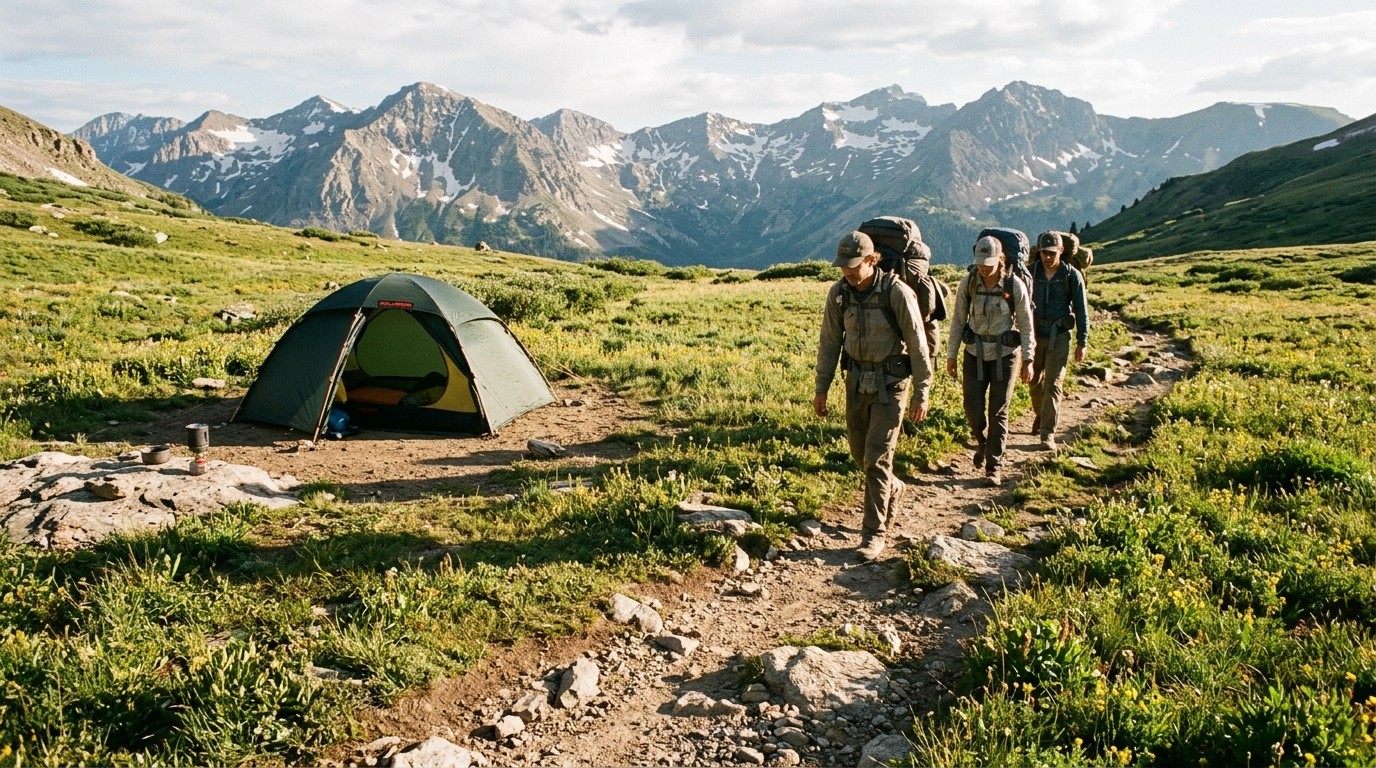
One of the most important parts of Leave No Trace Rules is choosing surfaces that can handle use. Durable surfaces include established trails, rock, gravel, dry grass, and officially designated campsites. They are better at absorbing repeated foot traffic than soft soil, moss, or young plants. Staying on durable surfaces prevents the spread of erosion and reduces long-term trail widening.
When you see puddles or muddy sections, the instinct may be to walk around them. But repeated avoidance can create parallel paths, which often becomes more damaging than the original mud. Leave No Trace Rules recommend staying on the main route whenever possible. The same logic applies to campsites. A compact, already-used site is usually better than opening a new one on fragile ground.
Good route discipline matters even when you are in a hurry. Shortcuts may save a minute, but they can cause months or years of damage. Leave No Trace Rules reward patience. Hikers who accept a slower, more deliberate pace often have the most sustainable trips and the fewest regrets.
Dispose of waste properly
Waste is one of the easiest areas to improve. Leave No Trace Rules require hikers to pack out what they pack in. That includes food scraps, wrappers, hygiene items, micro-trash, and any gear that breaks on the trail. Even biodegradable waste should usually be carried out unless the local area explicitly allows otherwise. Food scraps attract animals and create unnatural behavior. Small bits of trash are often missed by others, so leaving “just one thing” is still a problem.
Human waste needs special attention. In many backcountry areas, proper cathole technique or carry-out systems are required. Check local rules, because different places have different standards. Leave No Trace Rules are not generic guesses. They are location-aware. The cleaner the system, the safer the water and the healthier the trail corridor.
Trash control also includes emotional discipline. Many people do not realize how often convenience leads to environmental harm. A candy wrapper stuffed into a pocket, a tissue tossed “just this once,” or a bottle left because the pack feels full all create cumulative damage. Leave No Trace Rules teach you to think ahead about waste instead of reacting after the fact.
Leave what you find
Nature is not a souvenir store. Leave No Trace Rules say that rocks, plants, antlers, feathers, archaeological objects, and cultural features should stay where they are. Removing natural items changes the place for everyone else. It also disturbs ecological and historical systems that may be more important than they first appear.
People often pick up objects because they seem harmless. But one collected flower may represent future seeds. One moved stone may shelter insects. One taken artifact may erase a piece of local heritage. Leave No Trace Rules protect not only scenery but also meaning. The value of the trail is partly in its intactness.
Photography is a better way to remember the trip. A picture preserves the moment without stripping the environment. Leave No Trace Rules are not anti-memory. They are pro-preservation. The goal is to return home with experiences, not evidence of extraction.
Minimize campfire impacts
Campfires are emotionally powerful, but they are not always the best choice. Leave No Trace Rules recommend avoiding fires when a stove will do the job. In many places, a stove is cleaner, safer, and more efficient. Fires can scar ground, consume wood, create smoke, and leave ashes or half-burned materials behind.
If fires are allowed, keep them small and use existing fire rings when available. Never create a new ring where one is not designated. Gather only permitted dead wood, and avoid breaking branches off living trees. Leave No Trace Rules treat fire as a tool, not an assumption. Sometimes the most sustainable choice is no fire at all.
This principle matters psychologically too. Many hikers feel that a fire is part of the “real” outdoor experience. But the deeper experience is often the quiet one: stars, conversation, and calm without unnecessary disturbance. Leave No Trace Rules help shift the emotional center away from consumption and toward presence.
Respect wildlife
Animals should remain wild. Leave No Trace Rules require distance, silence, and no feeding. Feeding wildlife changes behavior, creates dependency, and can put both animals and people at risk. Even small interactions can have large effects. A squirrel that learns to beg, a bird that starts stealing food, or a bear that associates hikers with calories can become a safety problem.
Observation is better than interference. Use binoculars or a zoom lens. Move slowly. Avoid sudden noise. If an animal changes behavior because of your presence, you are too close. Leave No Trace Rules protect both the creature and the human experience. Watching without disturbing is a more respectful form of enjoyment.
Different regions need different caution levels. In areas with bears, monkeys, or large predators, food storage matters a great deal. In bird habitats, flash, crowding, and playback calls can disrupt nesting. Leave No Trace Rules ask you to adapt to local species instead of treating every hike as the same.
Be considerate of other visitors
Outdoor spaces are shared spaces. Leave No Trace Rules support social harmony by lowering noise, yielding appropriately, and keeping camps and trails pleasant for everyone. Loud music, shouting, and intrusive behavior can ruin a quiet natural atmosphere. Even if no physical damage occurs, poor etiquette damages the experience.
Courtesy also includes being aware of trail flow. Step aside for faster hikers when appropriate, keep groups compact on narrow paths, and do not block viewpoints or entrances. Leave No Trace Rules are about more than ecology. They are also about the human side of outdoor life.
A considerate hiker often receives a better response from others. People are more likely to help, share information, or cooperate when they feel respected. Leave No Trace Rules improve not just landscapes but social trust.
How Leave No Trace changes trip planning
Smart trip planning is where Leave No Trace Rules become easier to practice. If you choose your route carefully, the rest of the trip becomes simpler. Know the carrying capacity of the area, understand whether camping is allowed, and check whether the trail is high-use or low-use. Some places can absorb more traffic. Others need extra restraint.
Planning also helps you decide how much gear to bring, what foods to pack, and how to handle water. Bring reusable containers when possible. Use solid, lightweight systems that reduce packaging. Leave No Trace Rules are easier when the whole trip is designed around them, not added on as an afterthought.
This is especially important for travelers who like long-distance adventures, where Leave No Trace Rules prevent small mistakes from becoming big ones. Remote trail days can tempt hikers to prioritize convenience over impact. But a slightly more disciplined plan often leads to a better outcome. Leave No Trace Rules reward foresight.
Sustainable backpacking habits
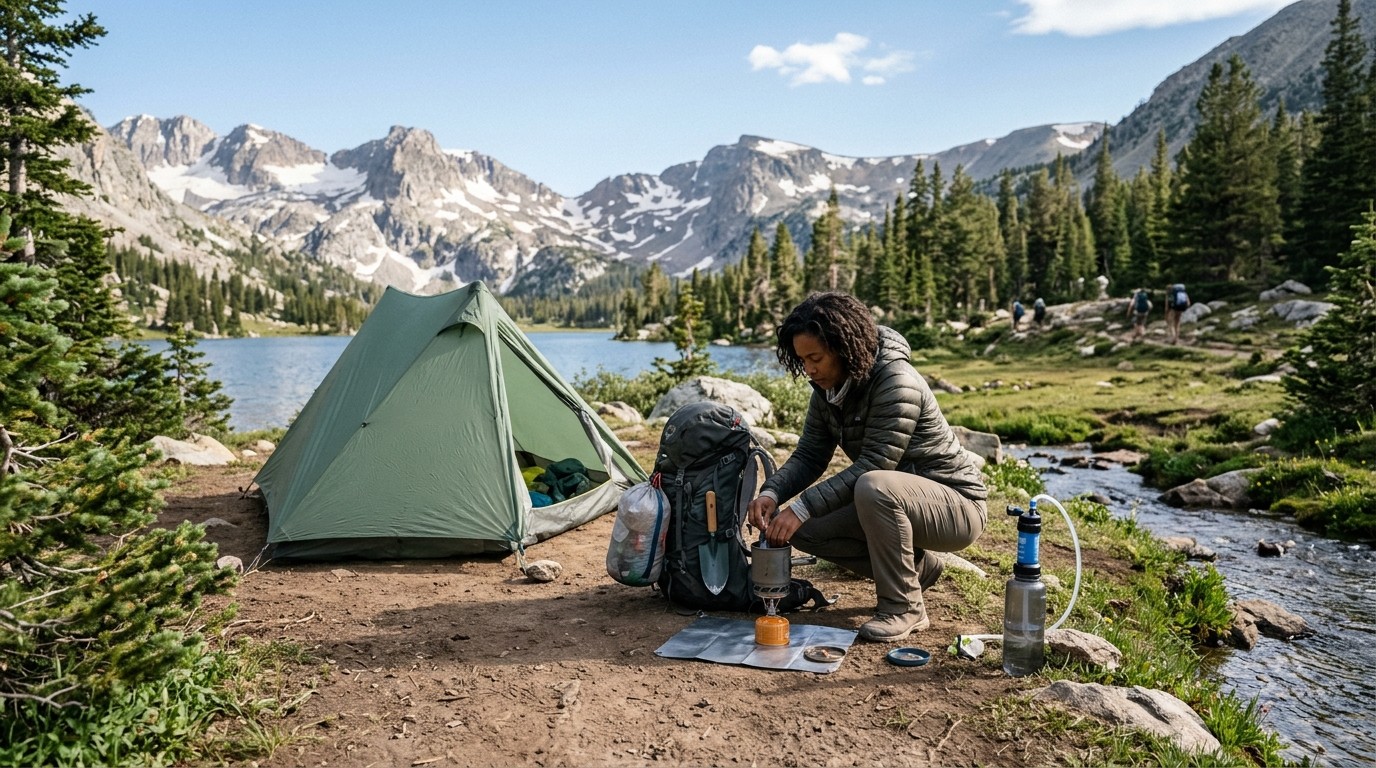
Backpacking is where small habits add up quickly. Leave No Trace Rules encourage hikers to camp on durable ground, cook efficiently, store food securely, and leave sites cleaner than they found them. The best backpacking habit is to reduce your footprint before it exists. That means using less packaging, choosing compact gear, and minimizing campsite spread.
A neat campsite is not just visually pleasing. It is environmentally smarter. The more your equipment stays within a small footprint, the less soil and vegetation are pressed down. Leave No Trace Rules work well when you think in circles, not sprawl. Keep your shelter, kitchen, and sitting area close together.
Backpackers also need to think about group behavior. A large group can cause more impact if everyone acts independently. Better coordination solves this. Assign tasks, cook in one area, and keep movement intentional. Leave No Trace Rules become manageable when the group acts as one unit rather than many scattered individuals.
Hiking in fragile environments
Some places are especially sensitive. Alpine meadows, desert crusts, wetlands, and moss-covered forests are easily damaged. Leave No Trace Rules matter even more in these settings because recovery is slow. In such places, the question is not only “Can I walk here?” but also “Should I walk here?” Sometimes a narrow, dry line is the best route. Sometimes the safest choice is to stay farther back. Leave No Trace Rules require humility. Not every appealing line across the landscape is a wise line to follow.
Weather can also change fragility. A trail that is solid in dry conditions may become vulnerable after rain or snowmelt. Leave No Trace Rules ask hikers to adjust behavior to the land’s condition, not their preference.
Group hikes and family trips
Group outings offer a chance to model good behavior. Leave No Trace Rules are especially valuable when children, new hikers, or mixed-experience groups are involved. Clear expectations make sustainable choices feel normal. Teach people to stay on trail, pack out waste, and respect wildlife from the beginning.
Family hikes are a good time to explain why the rules matter. Children respond well to simple cause-and-effect language. Show them how a shortcut can hurt plants or why feeding animals is harmful. Leave No Trace Rules become memorable when they are connected to visible consequences.
Group leaders should also pace the outing realistically. A rushed group makes poor choices. Leave No Trace Rules are easier to follow when the plan leaves time for rest, snacks, and observation. Slower does not mean weaker. It often means smarter.
Remote and long-distance travel
Long remote journeys demand extra discipline. Leave No Trace Rules become more important when camps are frequent, resupply is limited, and weather can alter plans quickly. In remote terrain, mistakes are harder to fix. That makes preparation, durability, and waste control essential.
This is where Remote Trip Planning becomes a real sustainability skill. The farther you travel from easy services, the more every decision matters. Food packaging, fuel planning, route selection, and water strategy should all reduce the need for improvisation. Leave No Trace Rules help remote travelers stay efficient and respectful at the same time.
Remote trips also test motivation. When you are tired, it is tempting to cut corners. But the trails you use may already be under pressure. Leave No Trace Rules remind you that the wilderness does not become less fragile just because the hike feels difficult.
Extreme terrain and high-stakes environments
In harsh conditions, Leave No Trace Rules protect more than scenery. They also support safety. Cold, heat, altitude, loose rock, desert scarcity, and storm exposure all make impulsive decisions more dangerous. When the environment is severe, minimal impact habits and risk reduction overlap.
This is especially true during Extreme Wilderness Travel. The more remote, wild, or physically demanding the route, the more important it is to avoid unnecessary disturbance. High-impact shortcuts, illegal fires, and wildlife interactions can have bigger consequences in harsh landscapes. Leave No Trace Rules are not only ethical in those places. They are practical survival tools.
A respectful traveler in extreme terrain prepares thoroughly and acts sparingly. That restraint is not weakness. It is maturity. Leave No Trace Rules help define that mindset.
Practical packing for low-impact hiking
The right gear makes sustainability easier. Choose reusable bottles, compact cookware, repairable clothing, and lightweight waste systems. Bring a small trash bag even on day hikes. Carry a trowel if the area requires it. Use durable footwear that matches the terrain. Leave No Trace Rules are much easier when your pack supports the behavior you want.
A good packing system also lowers stress. Less confusion means less accidental damage. If you can find your gear quickly, manage waste cleanly, and cook safely, you are less likely to improvise in harmful ways. Leave No Trace Rules and efficient gear design go hand in hand.
Common mistakes hikers make
Many hikers care about the outdoors but still make avoidable mistakes. They step off trail for photos. They leave fruit peels because they think they are “natural.” They feed birds or squirrels. They start fires where stoves would be better. They assume one person’s impact does not matter. Leave No Trace Rules exist because these habits happen often.
Another common mistake is treating rules as optional because a place looks empty. Quiet places can be fragile places. Leave No Trace Rules are meant for places that seem untouched precisely because they can be harmed so easily. The absence of visible damage is not a license to create new damage.
Building long-term habits
Leave No Trace Rules work best when you make them automatic. Pack the same way every time. Check the same trip questions every time. Rehearse waste handling and campsite cleanup. The more consistent your process becomes, the less mental effort it takes. Sustainable hiking should feel normal, not burdensome, and Leave No Trace Rules help make it routine.
Habit formation also helps group culture. When one hiker consistently acts with care, others often copy those behaviors. Leave No Trace Rules spread socially. Good habits are contagious in the best way.
Why these habits make hikes better
People sometimes think sustainability means giving something up. In practice, Leave No Trace Rules usually improve the trip. Cleaner camps are more pleasant. Better planning reduces stress. Respecting wildlife creates better sightings. Calm behavior makes the outdoors feel more peaceful. The rules protect the landscape, and Leave No Trace Rules protect your own experience.
That is the emotional core of sustainable hiking. You are not simply avoiding harm. You are choosing a deeper kind of enjoyment. Leave No Trace Rules let you travel in a way that supports beauty instead of consuming it.
How these principles apply to different travel styles
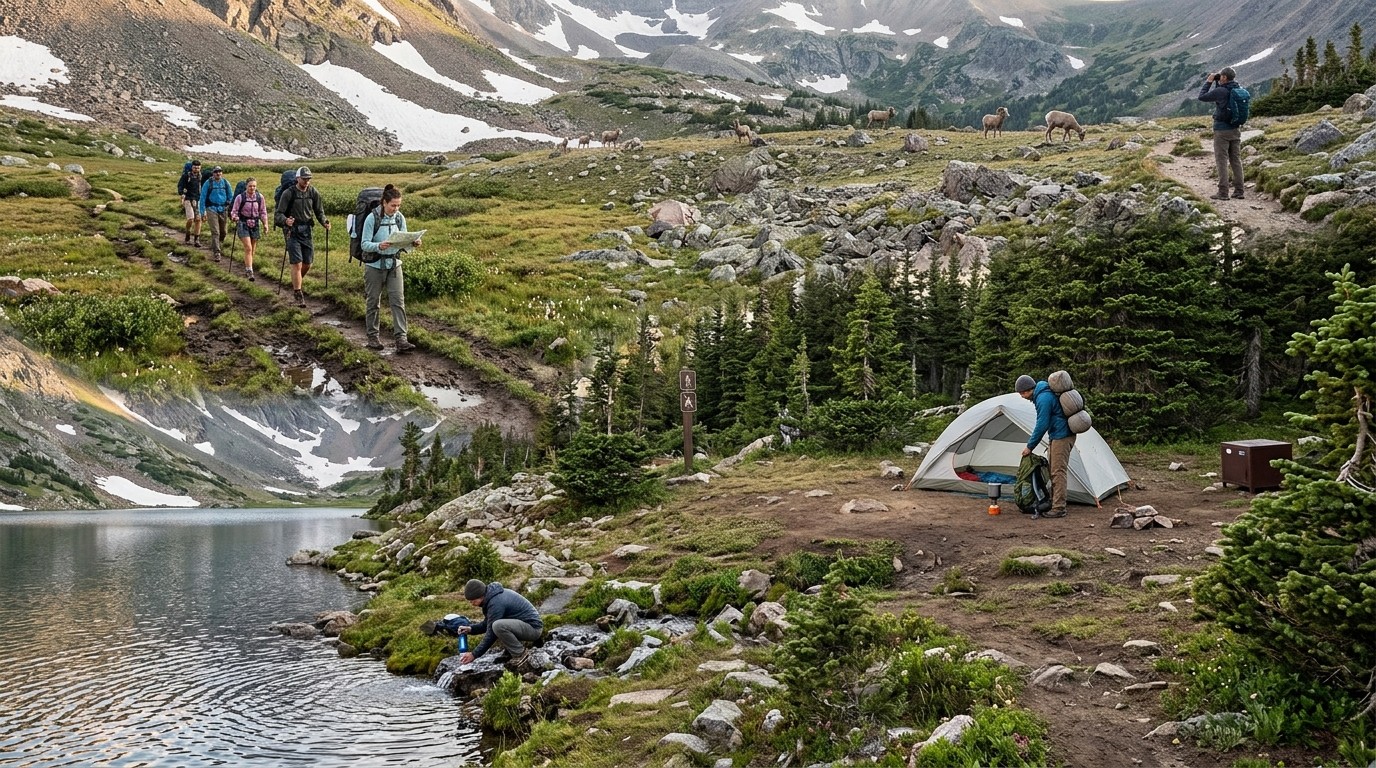
Not every outdoor trip looks the same. A beach trek, a mountain loop, a forest overnight, and a wildlife-focused route all create different kinds of impact. Leave No Trace Rules adapt to those differences by asking one consistent question: what action creates the least lasting harm?
That flexibility matters for modern travelers who mix nature with other trip styles. Someone comparing hiking culture with Bali Solo Travel may notice that the same respect for place, pace, and local context matters in both. A hiker who understands trail ethics often becomes a better overall traveler too.
The same is true for people who move between urban and outdoor experiences. A traveler coming from Solo Travel Thailand Escape may already know how to read local systems and adjust behavior. Leave No Trace Rules simply extend that awareness into wild terrain, where the consequences of carelessness are often bigger and slower to recover.
Responsible adventure is a choice
Sustainable hiking is not passive. It is a deliberate choice to behave as if the trail, the soil, the water, the animals, and the next visitor matter. Leave No Trace Rules turn that choice into action. They make it easy to know what to do when the path is muddy, the campsite is crowded, the weather is bad, or the scenery tempts you to cross a line.
Conclusion
Leave No Trace Rules are the foundation of modern sustainable hiking because they protect landscapes, wildlife, and the shared experience of being outdoors. They are simple enough for beginners and deep enough for experienced hikers to keep improving over time. When you plan carefully, stay on durable surfaces, manage waste, respect wildlife, and consider other visitors, you become part of the solution rather than part of the problem. That mindset makes every trail more rewarding. It also ensures the places you love remain healthy, beautiful, and worth returning to for many years.
Frequently Asked Questions (FAQ)
1. What are Leave No Trace Rules?
Leave No Trace Rules are a set of outdoor ethics that help people reduce environmental impact while hiking, camping, and exploring natural places.
2. Why are these rules important?
They protect ecosystems, reduce erosion, limit pollution, and preserve the experience for future visitors.
3. Are the rules only for backpackers?
No. Day hikers, campers, climbers, and all outdoor visitors can use Leave No Trace Rules.
4. Is it okay to leave organic waste behind?
Usually no. Even natural waste can attract animals or affect ecosystems. Pack it out unless local rules say otherwise.
5. Do I always need a campfire?
No. In many cases, a stove is the better low-impact option, and sometimes fires should be avoided entirely.
6. How close can I get to wildlife?
Close enough to observe without changing the animal’s behavior. If the animal reacts to you, move farther away.
7. What is the biggest beginner mistake?
Leaving the trail to avoid mud or taking shortcuts. That often causes more damage than staying on the original path.
8. How do I practice these rules on a short hike?
Bring out all trash, stay on the trail, avoid feeding wildlife, and respect other visitors. Small trips still matter.
9. Are Leave No Trace Rules hard to follow?
Not once they become habits. Good preparation makes them feel natural and easy.
10. Can these principles improve the quality of my trip?
Yes. They often reduce stress, improve wildlife encounters, and make the outdoor experience more peaceful and meaningful.




Leave a Reply