

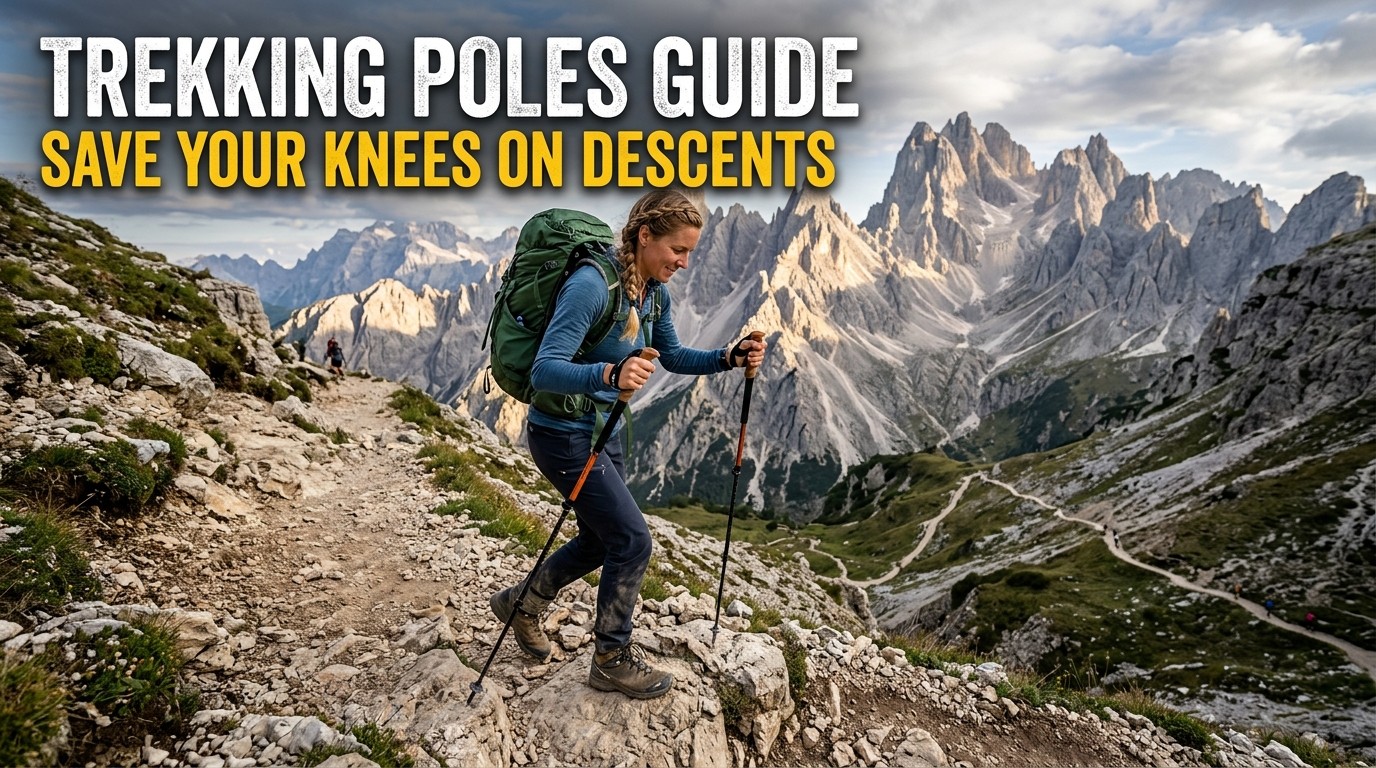
A smart Trekking Poles Guide helps hikers protect their knees, balance confidently on steep descents, and choose gear that feels stable, efficient, and comfortable for every trail.
A good Trekking Poles Guide starts with one simple truth: descents are usually harder on the body than climbs. Gravity pulls harder on the knees, hips, and ankles, and every uncontrolled step multiplies stress. That is why many hikers who feel fine on the way up suddenly notice pain, instability, or fatigue on the way down.
The right guide does not promise magic, but it does change how impact is shared through the body. Instead of letting each foot absorb the full load, poles create extra contact points that improve balance and reduce the sudden jolt that happens when a boot lands on a rock, root, or loose patch of gravel.
For people with previous knee discomfort, uneven terrain can feel intimidating. A practical Trekking Poles Guide helps turn that fear into a plan. When poles are adjusted correctly and used with rhythm, hikers often feel more controlled, more confident, and less likely to rush downhill in a tense, braking posture.
The biomechanics behind knee relief
This guide is useful because it explains how force travels. On descents, the front leg often acts like a brake, which places heavy load on the quadriceps and the kneecap. Over long distances, that braking pattern can become tiring and painful, especially with a heavy pack or poor footwear.
Poles help by distributing some of the work into the upper body. A well-practiced Trekking Poles Guide teaches hikers to plant the pole slightly ahead of the body, then let the arms and shoulders assist with balance. This does not remove all impact, but it can reduce the repeated strain that accumulates over thousands of steps.
The psychological benefit matters too. When someone trusts the support under their hands, they tend to move more smoothly. That smoother rhythm is a major reason a Trekking Poles Guide is valuable for long trekking days, technical paths, and descents where hesitation can lead to awkward foot placement.
Choosing the right pole type
Every Trekking Poles Guide should begin with material, weight, and locking system. Aluminum poles are usually durable and affordable, while carbon fiber poles are lighter and can feel more comfortable on long days. The best choice depends on budget, pack weight, and how much abuse the poles may face.
This guide also needs to cover fixed-length versus adjustable models. Adjustable poles are more versatile because length can be fine-tuned for climbs, descents, and travel. Fixed poles can be lighter and simpler, but they are less adaptable if the trail changes often.
Grip shape matters more than many hikers expect. This guide should encourage testing cork, foam, and rubber grips. Cork tends to manage sweat and shape itself to the hand over time, foam feels soft in cold weather, and rubber can be useful in wet conditions or for occasional winter use.
Pole length and how to set it correctly
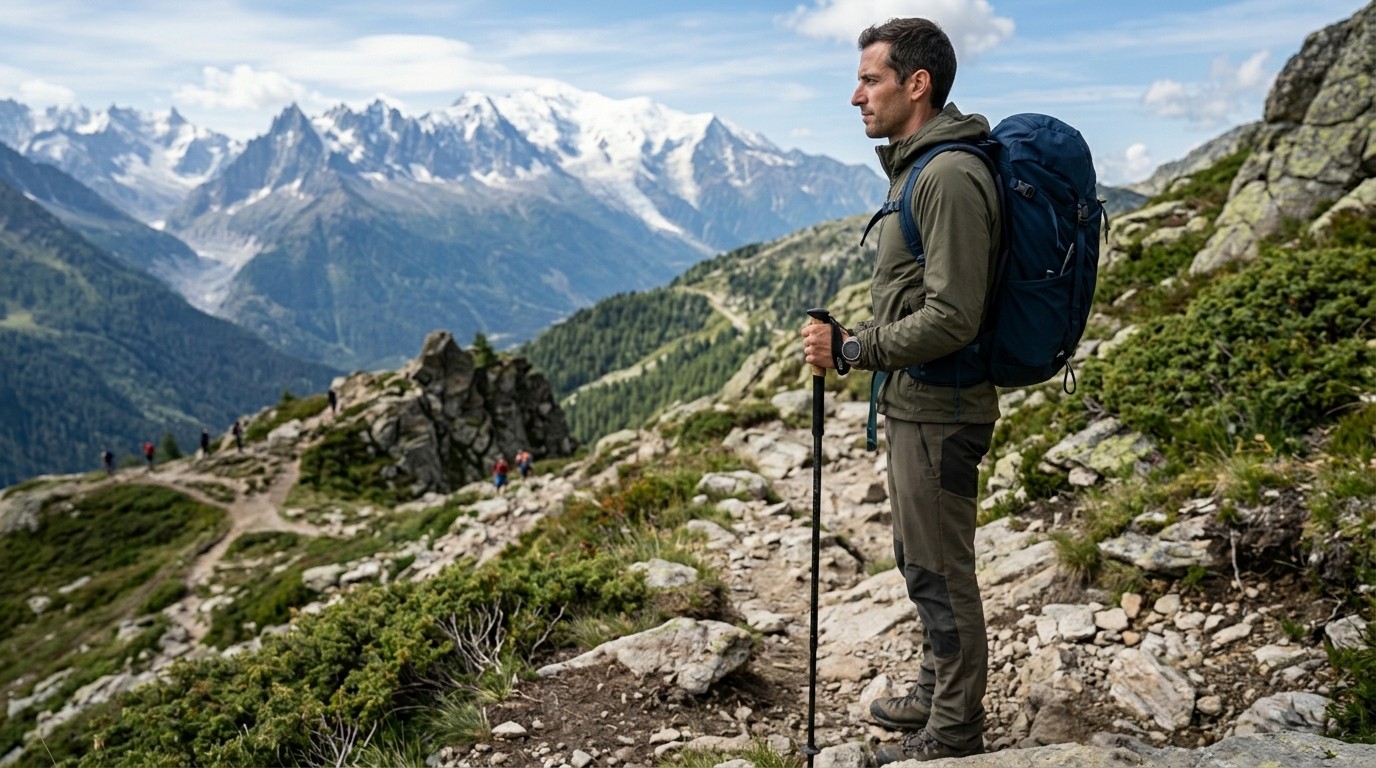
No Trekking Poles Guide is complete without proper sizing. On flat ground, the elbow should usually sit near a right angle when the tip touches the earth. That gives a useful starting point, though the ideal length can shift with terrain, posture, and the hiker’s height.
On descents, many hikers shorten their poles slightly so the arms can stay more relaxed while still reaching the ground comfortably. This guide should remind hikers that the goal is not stiff arms. The goal is a natural swing and a stable plant that supports controlled movement.
On climbs, some hikers prefer a slightly shorter setting for a more efficient rhythm. That is one reason a Trekking Poles Guide is so practical: it helps the hiker adapt the same tools to changing terrain instead of forcing a single posture everywhere on the trail.
How to use poles on the downhill
The simplest downhill technique in a Trekking Poles Guide is to plant the poles a little ahead of the feet, then step between them. That pattern creates a stable frame and prevents the body from leaning too far forward, which can overload the quads and make breathing feel tighter.
Many hikers make the mistake of jabbing the poles too aggressively. A smarter Trekking Poles Guide encourages smooth placement rather than stabbing. The pole tip should land with enough confidence to support movement, but not so hard that the rhythm becomes jerky or noisy.
The hands should remain relaxed. A tense grip wastes energy and can create unnecessary fatigue in the forearms. A better Trekking Poles Guide teaches hikers to think of the poles as guides and partners, not as crutches that must be squeezed for dear life on every step.
What to compare before buying
| Feature | Why it matters | What to look for |
|---|---|---|
| Weight | Affects arm fatigue | Light enough for long hikes |
| Material | Affects durability | Aluminum or carbon fiber |
| Locking system | Affects reliability | Easy to adjust securely |
| Grip | Affects comfort | Cork, foam, or rubber |
| Strap | Affects control | Supportive, easy to release |
| Basket | Affects terrain use | Small for summer, larger for snow |
| Foldability | Affects travel | Compact for packing |
This table belongs in any practical Trekking Poles Guide because the best pole is not always the most expensive one. It is the one that matches the terrain, the season, and the hiker’s body mechanics without creating extra hassle.
Why solo hikers care even more
For Solo Female Travelers, confidence on the trail is often about more than fitness. It includes feeling stable, prepared, and able to respond quickly if the ground changes suddenly. A Trekking Poles Guide can be especially reassuring because poles improve balance while also signaling readiness and self-reliance.
A solo hiker may also appreciate the quiet psychological support of having more points of contact on uneven ground. A Trekking Poles Guide can reduce the feeling of being exposed on loose descent sections, especially when fatigue arrives late in the day and decisions start to feel slower.
That confidence matters on remote trails, where one awkward step can change the rest of the day. A well-used Trekking Poles Guide helps hikers move with a more composed pace, which can lower anxiety and encourage better footing rather than rushed, defensive movement.
Matching poles with the pack you carry
The weight on your back changes everything. A Trekking Poles Guide should never treat the pack as an afterthought because a heavier load increases joint strain during descents. Even a moderate backpack can shift the center of gravity enough to make poles more useful.
Many hikers pair poles with Trekking Ultralight Backpacks to reduce total carrying stress. That combination can feel especially effective because lighter packs and supportive poles work together to ease the body’s workload. Less mass on the back means less force hitting the knees on the way down.
When the pack is balanced well, the poles can do their job more efficiently. A Trekking Poles Guide should encourage hikers to tighten straps, place heavier items close to the spine, and avoid sloppy packing that causes the load to sway on steep sections.
What to pack with the poles
A thoughtful Trekking Poles Guide also considers the rest of the system. Water, snacks, gloves, weather layers, and foot care supplies all influence how well a hiker performs on descents. If the body is underfed, cold, or blistered, pole technique will not feel as natural.
That is where Trail Hiking And Camping Gear comes in. Good boots, appropriate socks, a light shell, and reliable hydration support the poles by keeping the whole body functioning smoothly. The strongest technique in the world cannot fully compensate for gear that is mismatched to the trail.
A Trekking Poles Guide should also remind hikers to check pole tips, wrist straps, and baskets before leaving. A small failure in a single component can become a big annoyance halfway through a long descent, when the trail is already forcing constant attention.
Planning trips in different climates
Season changes matter more than many beginners expect. A Trekking Poles Guide for summer is not identical to one for cold shoulder-season hiking. Moisture, snow patches, and slippery roots all change the way the poles should be used and maintained over the course of the day.
Travelers looking at Best Places to Visit in Switzerland often discover that alpine terrain can vary dramatically even in one week. High paths, valley routes, and glacier-adjacent areas can all demand different levels of support, which is why adjustable poles are often a wise choice.
Likewise, people searching for Cold Countries to Visit in June or July may imagine mild summer weather, yet mountain trails can still feel chilly, wet, and unstable. A Trekking Poles Guide for those destinations should emphasize grip, pole durability, and reliable traction when the route turns slick.
Descending with less knee pain
The most important technique in a Trekking Poles Guide is learning not to fight the descent with the knees alone. Shorter, controlled steps usually work better than long, braking strides. A deliberate cadence lets the body absorb impact more evenly and reduces the chance of overextension.
It also helps to keep the torso slightly forward without collapsing at the waist. A Trekking Poles Guide should encourage an athletic, stacked posture rather than leaning backward. Leaning back can make the heels slam the ground and increase the strain that hikers are trying to avoid.
Hikers often ask whether poles are cheating. A clear Trekking Poles Guide answers that they are not. They are tools that let the body conserve energy, preserve joint comfort, and keep moving safely on terrain where the slope works against every step.
Training before a big trek
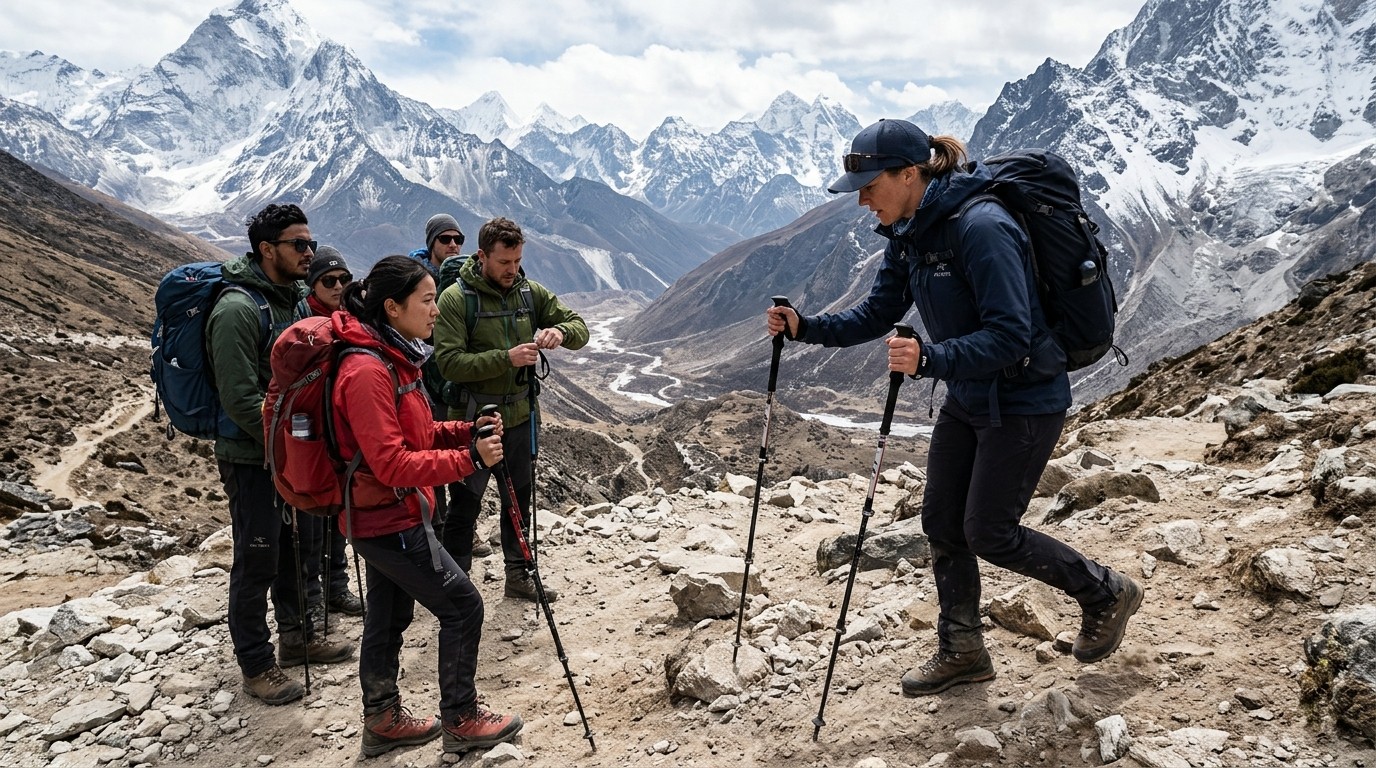
Even the best equipment needs practice. A Trekking Poles Guide should recommend rehearsing on local hills, stairs, or park paths before a major trip. Familiarity turns the poles into a natural part of walking rather than a clumsy extra object that distracts from the trail.
Start with flat terrain and short downhill stretches. This guide works best when the hiker learns the timing of plant, step, and recovery before trying long mountain descents. That practice builds muscle memory and reduces the chance of fumbling on a steep face.
New users should also practice collapsing and storing the poles quickly. A Trekking Poles Guide is more useful when the hiker can switch between poles and free hands with ease, especially when scrambling, taking photos, or moving through crowded trail sections.
Common mistakes that waste the benefit
One mistake is setting poles too long. This guide should warn that overly long poles can force the shoulders upward and make the downhill rhythm awkward. The result is often more fatigue, not less, because the upper body works harder than necessary.
Another mistake is using the wrists instead of the whole arm. A good Trekking Poles Guide teaches hikers to let the straps support the hand while the arm guides the pole. Poor strap use reduces control and can cause the hand to tire much faster than expected.
A third error is planting the poles too far ahead of the body. That creates a stiff, reaching motion that can actually throw the hiker off balance. A wise Trekking Poles Guide emphasizes that the pole should help the step, not drag the body into an unnatural position.
Trail type and pole strategy
| Trail type | Main challenge | Pole strategy |
|---|---|---|
| Steep dirt descent | Sliding and knee load | Shorter steps, quick plants |
| Rocky mountain trail | Balance and precision | Frequent micro-adjustments |
| Wet forest path | Slips and hidden roots | Light pressure, steady rhythm |
| Snowy shoulder-season route | Traction and stability | Wider baskets, careful placement |
| Long mixed trek | Fatigue management | Alternate pace and hand positions |
This comparison belongs in a practical Trekking Poles Guide because terrain decides technique. The pole that feels perfect on a dry forest path may need a different rhythm on scree, mud, or snow.
Comfort, straps, and hand fatigue
Comfort is not a luxury. A Trekking Poles Guide should treat it as performance equipment. If the handle shape irritates the palm or the strap rubs the wrist, the hiker will start shifting grip constantly, which breaks the flow and burns energy unnecessarily.
Straps should cradle the hand without cutting circulation. A solid Trekking Poles Guide recommends sliding the hand up through the strap from below, then pressing down so the strap, not the fingers alone, shares the load. That small detail can dramatically improve long-day comfort.
Hand fatigue can also reveal poor technique. If the hands are sore after every descent, a Trekking Poles Guide suggests checking grip pressure, strap fit, and pole length before blaming the terrain. Often the issue is not the trail, but a setup that has not been tuned properly.
Hydration, pacing, and recovery
Downhill hiking can feel easier on the lungs, but it still taxes the legs and connective tissue. A Trekking Poles Guide should pair pole use with smart pacing, regular water breaks, and controlled speed. The goal is sustainability, not the fastest possible finish.
Recovery begins before the hike ends. A Trekking Poles Guide recommends loosening the grip during flatter sections, switching hand positions if appropriate, and pausing before fatigue becomes sloppy movement. Small recovery habits preserve technique and protect the knees from cumulative stress.
After the hike, light stretching and a bit of walking can help the legs settle. A Trekking Poles Guide is not just about the trail itself; it is also about how the body feels later that day and the next morning.
Choosing poles for different travel styles
Backpackers, day hikers, and trekkers do not always need the same pole. A Trekking Poles Guide for long-distance hikers should prioritize durability and comfort over the lowest weight possible. A day hiker may prefer convenience and easy packing instead.
Travelers who move between cities and trails often benefit from foldable poles. A Trekking Poles Guide for these users should emphasize portability, because a pole that fits neatly into luggage is more likely to be carried and used consistently.
For winter travelers, a Trekking Poles Guide should consider gloves, baskets, and cold-weather grip. Even if the trail is not deeply snowy, cold fingers and wet hands can make pole handling more difficult, so the design should support secure movement in low temperatures.
Why descents feel harder than they look
Descents often surprise people because they look easy from a distance. A Trekking Poles Guide explains that downhill terrain is deceptive: the body is not lifting as much, but it is resisting constant impact and deceleration. That repeated braking is what wears the legs down.
The feet also have less room for error. A Trekking Poles Guide reminds hikers that loose rocks, hidden holes, and shifting soil can turn a simple step into a recovery move. Poles reduce the chance of turning a small mistake into a bigger fall or knee twist.
Confidence grows when hikers understand the challenge. A Trekking Poles Guide gives them a method instead of vague advice. Once they know why descents hurt, they can respond with posture, rhythm, and support rather than frustration.
A simple buying checklist
Before buying, test whether the poles feel natural in your hands, adjust smoothly, and lock securely. A Trekking Poles Guide should encourage checking the full range of motion, because a good pole is one you can set quickly and trust immediately on the trail.
Also think about the environments you actually visit. A Trekking Poles Guide for alpine travel may favor stronger construction, while a casual weekend hiker may value lighter weight and easier storage. The best choice is the one that fits your real habits.
Finally, do not ignore service and replacement parts. A Trekking Poles Guide is only useful if the equipment can be maintained. Tips, baskets, and straps should be easy to replace so the poles remain dependable over time.
Real-world use on varied trips
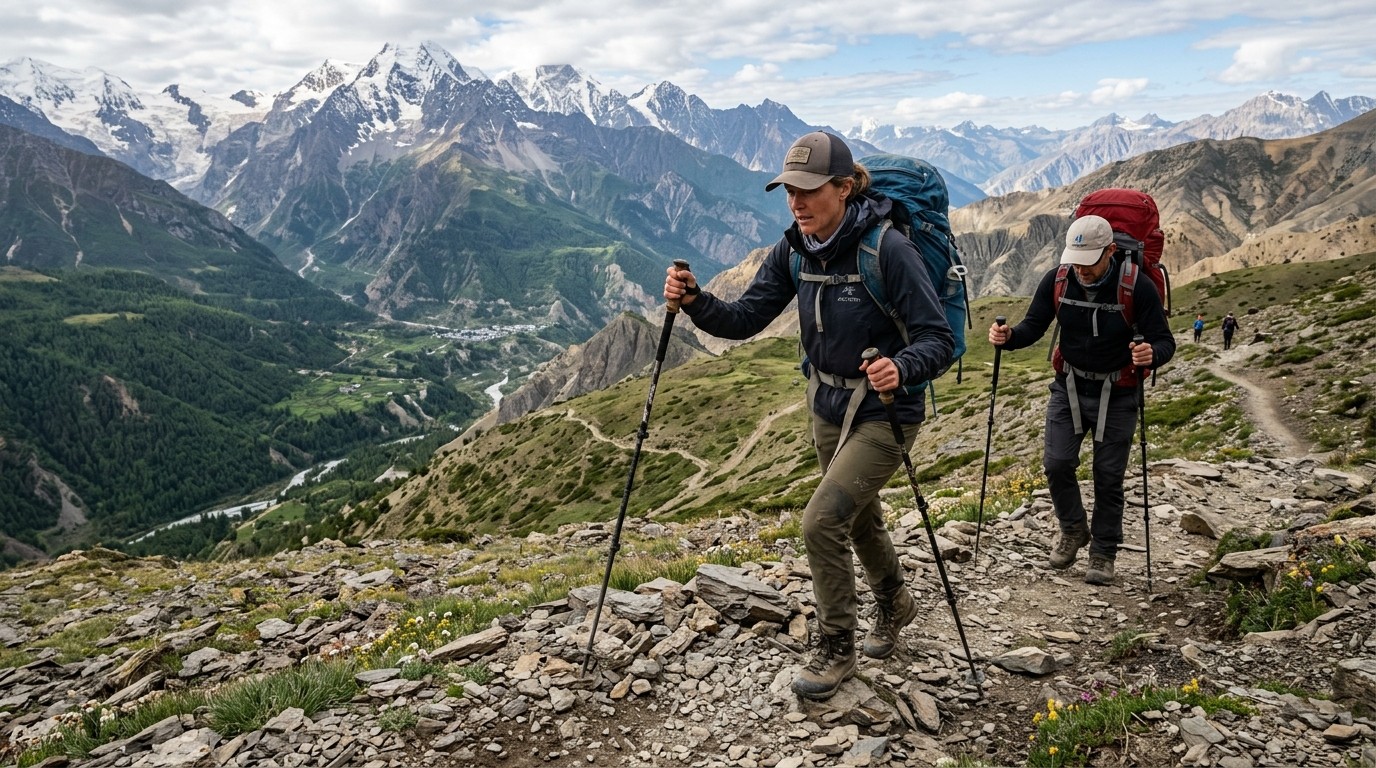
A hiker planning a scenic alpine journey may want a Trekking Poles Guide that focuses on long descents, changing weather, and rocky routes. On those routes, a pole becomes part of the hiking rhythm, not just an emergency support item.
Someone who spends weekends on local hills may need a simpler Trekking Poles Guide that emphasizes comfort and easy setup. Frequent, shorter use still benefits the knees, especially when the trail repeatedly ends with a downhill return to the trailhead.
For longer adventures, a Trekking Poles Guide can be part of a wider packing system that includes food, layered clothing, and a streamlined pack. The smoother the entire loadout, the easier it is to maintain good form when tired.
Who benefits most
| Hiker profile | Main benefit | Why poles help |
|---|---|---|
| Beginner | Confidence | More balance on uneven ground |
| Knee-sensitive hiker | Joint relief | Reduced downhill impact |
| Solo traveler | Stability | Better control on remote trails |
| Long-distance trekker | Endurance | Lower fatigue over time |
| Mountain traveler | Safety | Improved control on descents |
This table belongs in any Trekking Poles Guide because the right tool serves a specific need. Poles are not only for expert hikers; they are often most useful for people who want a safer, calmer, more efficient experience.
Building habits that stick
Technique improves when it becomes automatic. A Trekking Poles Guide should encourage short practice sessions on ordinary walks, not just on major trips. Repetition matters because downhill mechanics are easiest when the hands and feet already know the pattern.
Another habit is checking poles at the start of every hike. A Trekking Poles Guide should remind hikers to verify locks, strap orientation, and tip condition before leaving the car or trailhead. A one-minute check can prevent a lot of irritation later.
It also helps to reflect after each hike. This guide becomes more valuable when the user notices what felt easy, what felt awkward, and whether pole length or grip style should change next time. Small adjustments lead to a better experience.
Final thoughts on knee care
The body usually gives signals before pain becomes serious. A Trekking Poles Guide helps hikers listen earlier by reducing impact, improving balance, and creating smoother downhill movement. That can make a major difference over the life of a trail habit.
The most important idea is simple: poles are not about looking technical. A good Trekking Poles Guide is about preserving enjoyment, protecting joints, and making every descent feel more controlled. With the right setup, steep trails become less intimidating and more sustainable.
For many hikers, that is the real win. A Trekking Poles Guide supports confidence today and comfort tomorrow, which means more days on the trail, fewer aches after the hike, and a better relationship with challenging terrain.
Conclusion
A Trekking Poles Guide is most useful when it turns theory into practical habit. The right poles, adjusted to the right length and used with steady rhythm, can reduce knee stress, improve balance, and make steep descents feel far less punishing. That matters for beginners, seasoned trekkers, and anyone carrying a pack over uneven ground. It also matters for Solo Female Travelers who want extra confidence on remote routes, because stability often changes how safe and relaxed a trail feels. When paired with the right pack, footwear, and terrain-aware pacing, poles become a quiet but powerful part of a smarter hiking system. In the long run, that can mean less pain, more control, and more energy left to enjoy the views.
Frequently Asked Questions (FAQ)
1. Do trekking poles really help on descents?
Yes. They share some load with the upper body, improve balance, and reduce the repeated braking force that often irritates the knees.
2. How long should trekking poles be?
A common starting point is an elbow bent near ninety degrees on flat ground, then adjust slightly for climbs and descents.
3. Are carbon poles better than aluminum?
Carbon is lighter, while aluminum is usually tougher and often more affordable. The better choice depends on budget and terrain.
4. Should beginners use trekking poles?
Yes. Beginners often benefit a lot because poles improve confidence, stability, and rhythm on uneven trails.
5. Do poles help with a heavy backpack?
Yes. They can make a noticeable difference when pack weight increases downhill strain and throws off balance.
6. How do I avoid hand pain?
Use the straps correctly, loosen your grip, and make sure the handles and pole length fit your body well.
7. Are poles useful in wet or snowy conditions?
Yes. They can improve stability, but you may need to adjust basket size and be more careful with placement.
8. Can I travel with trekking poles easily?
Foldable or collapsible models are easier to pack, which makes them a good fit for mixed travel and hiking plans.
9. Do I need poles for easy trails?
Not always, but they can still reduce fatigue and improve comfort, especially on long descents or when carrying a pack.
10. What is the biggest mistake people make?
Using the wrong length or planting the poles too far ahead often reduces the benefit and makes movement feel awkward.




Leave a Reply