

Solo Travel Safety works best when you combine calm planning, trustworthy destinations, and simple daily habits that reduce risk while keeping freedom, curiosity, and confidence intact.
Solo Travel Safety starts before you book anything. The safest trips usually come from a mix of smart destination choice, realistic expectations, and a plan for what happens if things go wrong. The U.S. State Department specifically urges travelers to research destinations, review official advisories, and use tools like STEP before leaving.
Solo Travel Safety also has a psychological side. Most solo travelers do not feel unsafe because danger is everywhere; they feel uneasy because unfamiliar systems create uncertainty. When transport, communication, arrival timing, and accommodation are easy to understand, the brain relaxes and the trip feels lighter. That is why clear planning matters so much.
Solo Travel Safety gets stronger when you treat the trip like a series of manageable decisions rather than one big leap. People often imagine solo travel as a test of bravery, but the best trips are usually built on small habits: checking advisories, planning transport, saving emergency contacts, and choosing places that are naturally easy to navigate.
Solo Travel Safety becomes far easier when you start with the right countries. The 2025 Global Peace Index highlights Iceland, Norway, Finland, Japan, and Singapore among the world’s safest countries, making them a strong starting point for solo itineraries built around stability and low-friction travel.
How to read safety signals before you go
Solo Travel Safety improves when you look beyond travel photos and examine the systems underneath them. Peace rankings matter because they reflect broader stability, crime levels, and governance. That does not guarantee a perfect trip, but it does give you a much better baseline than guessing from social media alone.
Solo Travel Safety also depends on how easy it is to move, ask for help, and recover from small mistakes. The U.S. State Department’s travel guidance emphasizes reviewing destination-specific risks and using official information to understand local conditions before arrival. That habit is especially useful when you are traveling alone and do not have a companion to double-check decisions.
Solo Travel Safety is stronger in places where local transport is clear and predictable. Singapore’s official tourism site says it is easy to get around by public transportation, with trains and buses connecting nearly the entire island. That kind of structure reduces day-to-day friction and makes the destination feel easier from the first hour.
Solo Travel Safety is also about matching the destination to your energy level. Some places are best for a slow city break, while others reward people who want nature, self-driving, or a more active pace. New Zealand’s tourism site offers self-guided tours, itineraries, and self-drive options, which is helpful if you want independence without chaos.
Pre-trip systems that make a trip calmer
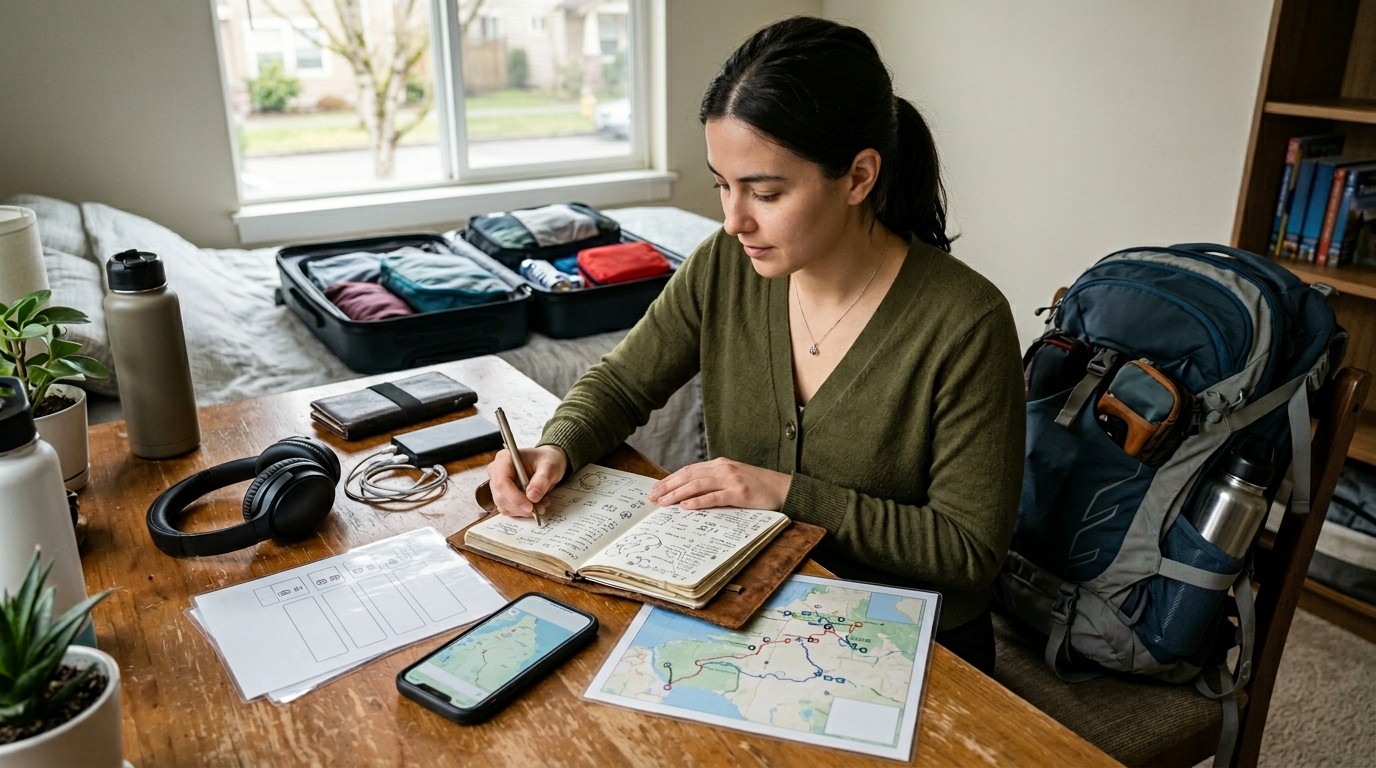
Solo Travel Safety begins with boring but powerful preparation. Save your passport copy, itinerary, accommodation details, and emergency contacts in more than one place. The State Department recommends planning ahead, reviewing advisories, and using tools like the International Travel Checklist so you can move with less stress once you land.
Solo Travel Safety gets better when someone back home knows your plan. The STEP program exists so travelers can enroll and receive alerts from U.S. embassies and consulates abroad. That is useful for solo travelers because it creates a simple connection to official updates without making you depend only on your own research.
Solo Travel Safety is easier when your arrival day is intentionally simple. Try to land in daylight, keep the first transfer short, and choose accommodation that is easy to find from the airport or station. The reason is psychological as much as logistical: early wins reduce anxiety and help you settle before fatigue starts making decisions feel harder.
Solo Travel Safety also means choosing accommodations that reduce unnecessary exposure. Look for properties with strong reviews, clear check-in instructions, and easy access to public transit or central streets. You do not need the fanciest place; you need a place that supports calm routines, predictable movement, and quick exits if plans change.
Choosing destinations that support independence
Solo Travel Safety is strongest when the destination itself is stable and easy to read. Iceland remains a standout because the 2025 Global Peace Index places it at the top of the global peace ranking, and official Iceland travel resources show that public transport options include buses, ferries, domestic flights, and city walking infrastructure in Reykjavík.
Solo Travel Safety also makes Japan a compelling choice. Japan appears among the world’s safest countries in the 2025 Global Peace Index, and official Japan travel resources provide practical visitor support, including around-the-clock help for travelers and clear guidance for safe travel. That combination of order and support helps solo trips feel manageable.
Solo Travel Safety becomes very approachable in Singapore because the city-state is compact, organized, and easy to navigate by train and bus. Official Singapore travel information describes efficient public transport and practical planning details, which is exactly what solo travelers need when they want less friction and more time enjoying the destination.
Solo Travel Safety can also be excellent in New Zealand if you prefer nature with structure. Official tourism resources highlight self-guided tours, itineraries, and self-drive options, which makes the country flexible for solo travelers who want freedom but still value a clear route and practical support.
Building daily habits that reduce risk
Solo Travel Safety gets stronger when you avoid rushing. Walk with purpose, keep your phone charged, and know where you are going before you leave the hotel. A calm pace looks ordinary, but it reduces avoidable mistakes, makes you appear more confident, and gives you more time to notice your environment.
Solo Travel Safety also benefits from a simple visibility rule: know where you can go if you need help. That means identifying busy cafés, staffed hotels, transit desks, pharmacies, and official tourist information points. The State Department’s traveler guidance is built around the same idea of using official, visible, and reliable resources.
Solo Travel Safety improves when you keep your behavior consistent. Avoid broadcasting that you are lost, uncomfortable, or carrying expensive items in a way that invites attention. None of that means acting afraid; it means minimizing unnecessary signals that can make you a target for opportunistic problems.
Safest Solo Female Travel Destinations is usually best when your schedule leaves space for recovery. Overpacked days create fatigue, and fatigue weakens judgment. A little margin between activities lets you reassess, eat properly, and move more thoughtfully, which is especially important when you are alone in an unfamiliar place.
Health precautions that matter more than people expect
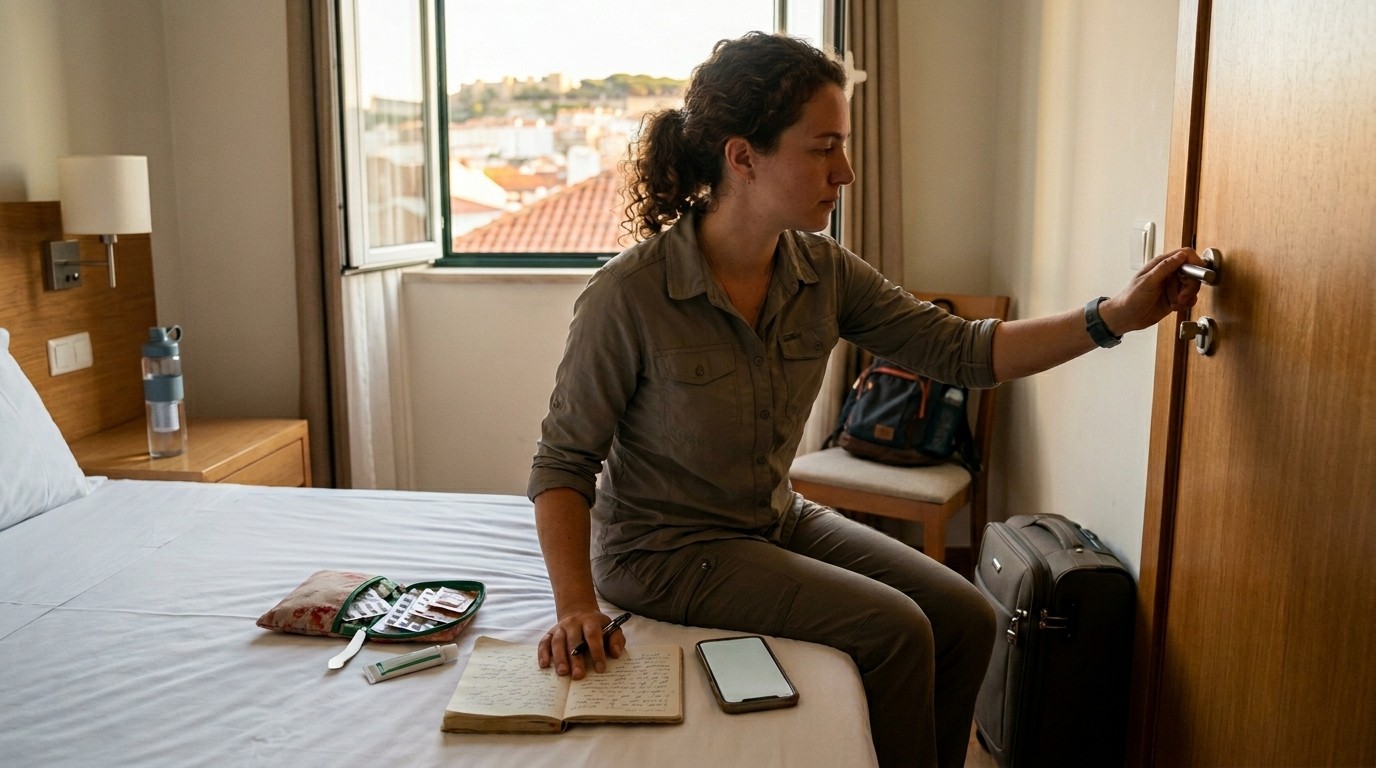
Solo Travel Safety is not only about crime or transport. Health risks can change a trip quickly, especially in mountains, remote areas, or places with uncertain water quality. The CDC’s high-altitude guidance explains that reduced oxygen, cold, dryness, and low air pressure can cause altitude illness, and that travelers should ascend gradually.
Solo Travel Safety in mountain destinations improves when you respect altitude sickness prevention from day one. The CDC advises avoiding alcohol and heavy exercise for at least the first 48 hours after arriving above 8,000 feet, and recommends giving your body time to adapt instead of pushing a hard itinerary immediately.
Solo Travel Safety around water also needs realistic preparation. The CDC says portable filters do not remove all types of germs, and many do not remove viruses reliably. That means an Emergency Water Filter can be useful, but only as part of a bigger plan that includes boiling, purification, or safer water sources when needed.
Solo Travel Safety becomes more resilient when you carry a small health kit that matches your route. If you are heading into remote areas, check whether you need hydration salts, motion sickness support, blister care, or altitude-related medication advice from a clinician before departure. The CDC’s adventure-travel guidance makes clear that elevation and environment change the risk profile.
Communication, connection, and backup
Solo Travel Safety improves when communication is effortless. Buy local data, keep offline maps downloaded, and make sure someone back home can reach you. That may sound basic, but many travel problems become harder only because the traveler cannot quickly share location, confirm timing, or check a route before moving.
Solo Travel Safety also means knowing where official help comes from. The State Department says travel advisories describe destination-specific risks and recommended precautions for U.S. citizens, and STEP provides embassy and consulate alerts while abroad. Those are valuable tools because they reduce the chance that you rely on rumors or outdated social posts.
Solo Travel Safety grows when you build a habit of verifying before trusting. If a neighborhood, train line, or excursion sounds risky or confusing, check the official tourist board, the transport operator, or the destination’s government guidance. That habit saves time and prevents a lot of avoidable emotional stress.
Solo Travel Safety is not about assuming the worst; it is about removing uncertainty where possible. When you know your route, your backup contact, and your escape options, you can be more spontaneous in the moment. Confidence is easier when the basics are already handled.
A practical way to think about destination fit
Solo Travel Safety becomes easier when you match the country to the kind of trip you actually want. Iceland is ideal if you want open landscapes and a calm pace. Japan works beautifully if you want structure, efficiency, and strong public systems. Singapore fits travelers who want compact convenience, while New Zealand rewards people who want nature and self-guided freedom.
Solo Travel Safety also depends on your comfort with planning. If you like highly organized trips, choose destinations with excellent visitor information and simple transport. If you are comfortable with road trips and rural routes, New Zealand may feel perfect. If you prefer walking city neighborhoods with easy transit, Singapore or Reykjavík may suit you better.
Solo Travel Safety gets better when you stop comparing yourself to other travelers. The right destination is not the one that sounds most adventurous; it is the one that aligns with your pace, confidence, and needs. A quiet, well-run city can be a far better solo experience than a famous place that leaves you constantly overstimulated.
Solo Travel Safety can also be a seasonal decision. Weather, light, crowding, and transport reliability all affect the experience. That is why checking the official tourism board and government advice before booking is still one of the simplest ways to improve the odds of a smooth, enjoyable trip.
The safest places are the ones that fit your life
Solo Travel Safety is not a single rule; it is a system made of small decisions. The safest countries for solo female travelers often share stable governance, low violence, and excellent public services, but the traveler still has to choose routes, timing, and lodging that match her own comfort level.
Solo Travel Safety becomes much more realistic when you accept that “safe” does not mean “carefree.” Every trip still has normal travel problems: delays, tiredness, language gaps, and occasional confusion. The difference is that a good plan keeps those issues from becoming the story of the trip.
Solo Travel Safety is also shaped by how you respond when something feels off. The best response is usually not panic, but pause: move to a busy place, check your map, contact your accommodation, or call official support. That calm response style is easier to use when you have already planned your backup steps.
Solo Travel Safety over time becomes a skill. The more trips you take, the faster you learn which arrival times work, which neighborhoods feel right, and which habits make you feel grounded. That experience compounds, and each well-planned trip makes the next one more relaxed and more enjoyable.
Conclusion
Solo Travel Safety is ultimately about freedom with structure. When you choose stable destinations, use official travel guidance, respect health risks, and keep your daily habits simple, you create room for adventure without losing control. The most rewarding solo trips are rarely the most chaotic ones; they are the ones that feel spacious, calm, and well-supported. Whether you are heading to Iceland, Japan, Singapore, New Zealand, or another destination that fits your style, the goal is the same: move confidently, stay aware, and make decisions that protect your energy as much as your safety. That is how solo travel becomes not just possible, but deeply enjoyable.
Frequently Asked Questions (FAQ)
1. What is the first thing to do before a solo trip?
Solo Travel Safety starts with checking the official travel advisory for your destination and saving the itinerary somewhere accessible. That one step gives you a clear baseline for risks, entry issues, and local precautions before you spend money or commit to plans.
2. Which countries are best for beginners?
Solo Travel Safety for beginners is usually strongest in places like Iceland, Japan, Singapore, Finland, Norway, and New Zealand because they are highlighted among the world’s safest or most peaceful countries and also offer strong visitor infrastructure. Those features make first-time travel feel more manageable.
3. How do I stay aware without feeling anxious?
Solo Travel Safety is easier when you create routines. Know your route before leaving, keep your phone charged, and choose visible, busy places when you need to pause or reassess. Awareness becomes less stressful when it is part of a routine instead of constant worry.
4. Is it safe to travel alone to mountain destinations?
Solo Travel Safety in mountains depends on preparation, not just confidence. The CDC recommends gradual ascent, avoiding alcohol and heavy exercise early at altitude, and planning enough time to adapt. If a route is high, treat altitude sickness prevention as part of the itinerary.
5. Do I need a water filter for solo travel?
Solo Travel Safety may require one in remote or uncertain-water environments, but not as your only safeguard. The CDC notes that portable filters do not remove all germs and many do not reliably remove viruses, so an Emergency Water Filter should be combined with boiling or other treatment methods.
6. What is the best way to get help abroad?
Solo Travel Safety improves when you know the official support channels before you go. Enrolling in STEP gives you embassy and consulate alerts, and travel advisories explain destination-specific risks and recommended precautions. Those tools are especially useful when you are traveling alone.
7. How do I choose a hotel or area?
Solo Travel Safety is better when you choose accommodation with strong reviews, clear access, and simple transport links. The goal is not luxury; the goal is to reduce friction, shorten stressful transfers, and make it easier to get help or change plans if needed.
8. What if I get lost or overwhelmed?
Solo Travel Safety works best when you have a default response. Move toward a public, staffed place, check your map offline, and contact your accommodation or official support if needed. Having a preset response helps you act calmly instead of freezing.
9. Are city trips safer than nature trips?
Solo Travel Safety can be excellent in both, but the risk profile is different. Cities usually offer easier access to transport and help, while nature trips demand more self-reliance, especially for weather, water, and altitude. The right choice depends on your preparation and comfort.
10. What matters most for long-term confidence?
Solo Travel Safety becomes easier every time you travel with a clear system. Review advisories, choose destinations with strong infrastructure, build arrival routines, and learn from each trip. Confidence grows when safety feels like a habit, not a panic response.




Leave a Reply