

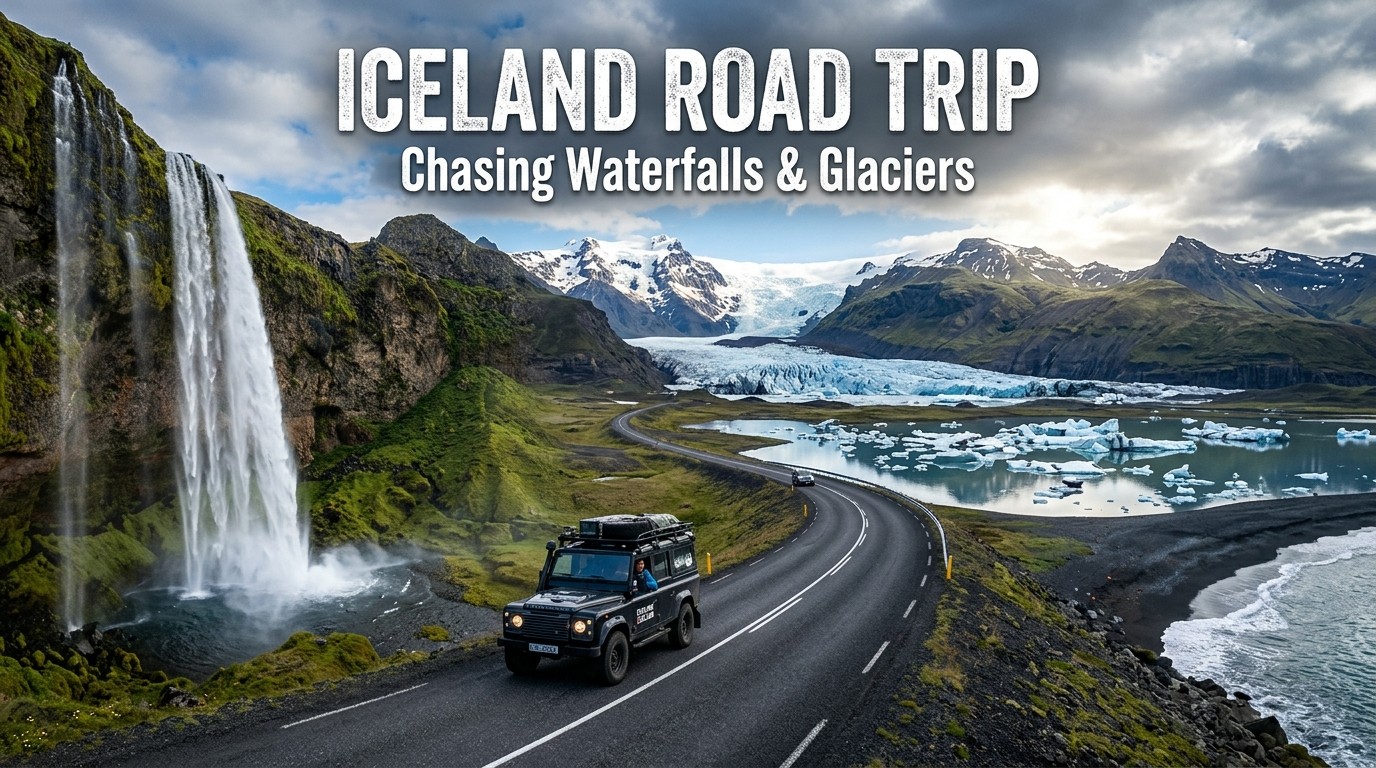
An Iceland Road Trip rewards careful planners with waterfalls, glaciers, open coastlines, and a route that feels remote yet manageable when weather, timing, and road checks are respected.
An Iceland Road Trip is not only about covering distance; it is about moving through a landscape that keeps changing from one hour to the next. The country’s official Ring Road, Route 1, circles about 1,322 km and links many of the best-known natural sights, including glacier scenery and thundering waterfalls, which is why so many travelers build their plan around it. SafeTravel also stresses that weather and road conditions can change fast, so checking conditions before heading out is part of the trip itself, not an afterthought.
An Iceland Road Trip also rewards patience. The same day can bring a calm stretch of pavement, a windblown coastal segment, and a stop at a waterfall that feels almost cinematic. That variety is part of the appeal, but it also means the trip works best when you leave room for delays, scenic stops, and weather shifts. The journey becomes more enjoyable when you stop treating the drive as something to endure and start treating it as part of the experience itself.
Choosing the right season and rhythm
The season you choose changes everything on an Iceland Road Trip. Summer usually offers the easiest driving conditions, the longest days, and broad access to coastal and inland stops, while colder months demand more flexibility because road and weather conditions can shift quickly. The Icelandic Meteorological Office publishes up-to-date forecasts with wind, rain, snow, and temperature details, which is why daily checks matter so much here.
If you want your Iceland Road Trip to feel relaxed instead of rushed, build the schedule around daylight, not just mileage. Iceland’s scenery invites photo stops, coffee breaks, and extra time at viewpoints, especially around the south coast and glacier areas. A lighter schedule gives you room to enjoy each stop without feeling as though you are racing the clock to prove you saw everything correctly.
Designing the route before you leave
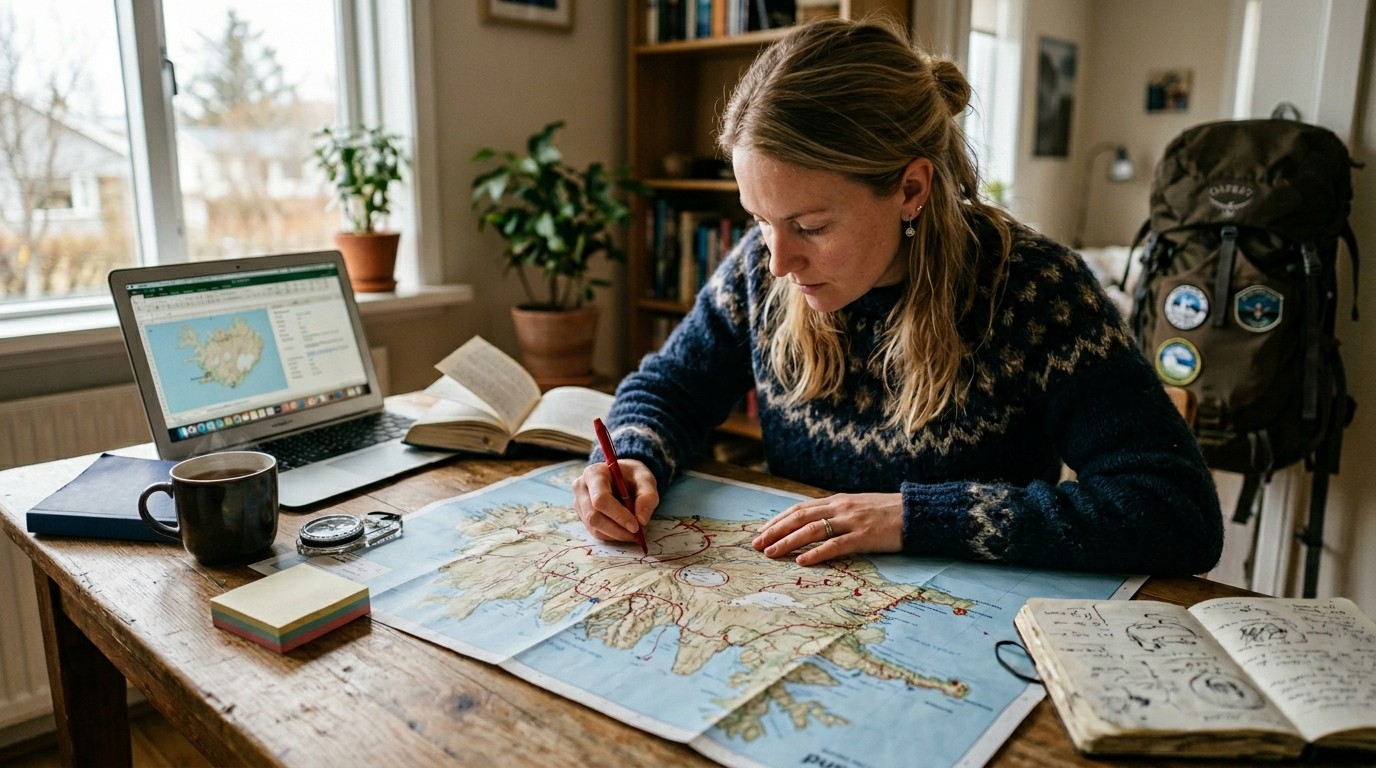
A smart Iceland Road Trip begins with a map, but not the kind that simply draws a line from airport to airport. Instead, decide which style fits you: a loop around the Ring Road, a focused south-coast drive, or a mixed plan that combines Reykjavik, the Golden Circle, and a glacier-heavy section near Vatnajökull. Visit Iceland describes the Ring Road as the ultimate road trip route, and it is easy to see why people keep returning to it.
For first-time travelers, an Iceland Road Trip is often most comfortable when it follows a logical geographic rhythm. Start with short driving days near the capital, move through the Golden Circle, continue toward the south coast, and then decide whether to extend into the east or return with fewer detours. That structure reduces decision fatigue because each day has a clear purpose rather than a vague list of attractions.
A simple route logic
Think of the route as three layers: arrival comfort, scenic payoff, and safety margin. An Iceland Road Trip that tries to squeeze every major stop into too few days often turns into a stressful race. A better plan uses fewer overnight moves and more meaningful pauses. This is especially useful when you want to pair waterfalls with glacier views without spending the entire trip in transit.
A second reason the route matters is that certain attractions naturally cluster together. Jökulsárlón sits right by Highway 1, and Glacier Adventure notes that the lagoon is a major base for glacier hikes and ice cave access in the Vatnajökull area. That means an Iceland Road Trip can be more efficient when you group similar sights instead of zigzagging between unrelated places.
Waterfalls as the emotional heart of the drive
Most travelers picture a road journey in Iceland through waterfalls, and that instinct is not wrong. The country’s scenic routes often lead to powerful falls that become natural rest points in the day. Visit Iceland’s travel pages repeatedly highlight major waterfall scenery along classic routes such as the Ring Road and Golden Circle, which makes it easy to understand why waterfall stops are so central to the trip.
On an Iceland Road Trip, waterfalls are more than just photo spots. They are pacing tools. A stop at a waterfall gives your body a break from driving, your mind a reset from navigation, and your trip a sense of rhythm. Because many falls are easy to access from the road, they work well as natural anchors between longer stretches of scenery. That is one reason travelers often remember them so vividly long after the trip ends.
Another reason waterfalls matter is that they help you notice the scale of the landscape. The mist, cliffs, and broad valleys make it clear that Iceland is not a place to rush through casually. An Iceland Road Trip becomes more meaningful when you let the waterfalls set the pace instead of treating them as quick box-ticking stops. That slower mindset usually produces better photographs, better memories, and fewer mistakes.
Glaciers, ice, and the feeling of space
Glacier landscapes give the journey its dramatic edge. Visit Iceland describes glacier experiences in South Iceland and notes that Vatnajökull-area tours range from glacier walks to ice cave experiences, with new caves changing from year to year as the glacier evolves. That makes the eastern and southeastern sections of an Iceland Road Trip feel especially dynamic, because the scenery is both massive and alive.
Jökulsárlón is one of the most useful examples of how glaciers shape the trip. The official Visit Iceland listing describes the lagoon as sitting right by Route 1, with boat trips among icebergs and easy access for sightseeing. That means an Iceland Road Trip can include a glacier lagoon without adding a complicated detour, which is one reason the south and southeast remain such popular road trip zones.
A glacier stop also changes the emotional tone of the road. Waterfalls feel energetic, but glaciers feel quiet, slow, and immense. That contrast is part of the magic of an Iceland Road Trip. It reminds you that the country’s beauty is not just about movement; it is also about stillness, scale, and the sense that time works differently in a place shaped by ice.
Booking decisions that reduce stress
The easiest way to make an Iceland Road Trip calmer is to reduce booking friction before you arrive. That includes the car, the rooms, and the transfer plan between the airport and your first night’s stay. When travelers wait until the last minute, they often spend more time on logistics than on the actual journey. One way to avoid that is to confirm flight, hotel, and transfer timing early so the trip starts with a clear sequence rather than a scramble. Flight, Hotel & Transfer Booking Logistics matter more than many visitors expect because Iceland is gorgeous, but the airport-to-road transition can feel tiring if every step is still undecided.
The same principle applies to accommodation. An Iceland Road Trip feels smoother when your nightly stops are placed with realistic drive times in mind. That means not chasing the cheapest room if it forces a risky evening drive, and not choosing a beautiful place that leaves you too far from the next major sight. Balance is usually more valuable than perfection, especially on a route where weather can alter the pace at any moment.
If your style is to compare one adventure against another, it helps to remember that a trip like Nepal Base Camp Trek is physically and logistically very different from an Iceland drive. A trek depends heavily on walking endurance and mountain pacing, while a road journey depends more on weather awareness, road condition checks, and smart overnights. That contrast highlights why a road trip needs its own kind of planning instead of a copied adventure template.
Safety, weather, and road reality
The most important safety rule on an Iceland Road Trip is simple: do not rely on yesterday’s conditions. SafeTravel states that weather and road conditions in Iceland differ from what many visitors are used to and can change fast, while the Icelandic Meteorological Office provides current forecasts that often include wind, temperature, rain, and snow detail by region. That is why a daily check should be part of your routine, not an optional extra.
Drivers should also respect gravel transitions and single-lane bridges. SafeTravel warns that many roads away from the Ring Road are gravel and that speed should be reduced because tires can lose grip, and it also notes that single-lane bridges require slowing down and assessing the other driver’s intention. These are not small details; they are the habits that keep a scenic drive from becoming a stressful one.
Weather-driven disruption is not hypothetical. Reuters reported in 2024 that a glacial flood in southern Iceland damaged a section of road and closed a stretch near a bridge, underscoring how quickly the landscape can affect transport. For an Iceland Road Trip, that is a reminder to keep the plan flexible, watch route conditions, and avoid assuming that a map is more current than the road authority.
When the trip is more about pacing than distance
A successful Iceland Road Trip often depends on leaving some margins open. That means planning fewer commitments per day, especially when you want waterfall stops, glacier viewpoints, and meal breaks without feeling rushed. Because the Ring Road is long enough to cover a wide range of terrain, a little extra time on each leg usually creates a better experience than a tightly packed schedule.
An easy way to think about pacing is to divide the day into drive, explore, and recover. The drive gets you to the next region, the explore phase gives you the scenic reward, and the recover phase lets you eat, rest, and reset before the next segment. An Iceland Road Trip feels much more manageable when those phases are separated clearly instead of being blended into one long, tiring blur.
The mental side matters too. Travelers often feel pressure to see everything, but a road journey in this country is better when you accept that some of the best moments happen between the famous stops. An Iceland Road Trip rewards stillness, weather changes, and unplanned pauses as much as landmark chasing. That is part of why it stays memorable even after the photographs are forgotten.
A sample structure for a smoother itinerary
A simple way to shape an Iceland Road Trip is to start in the Reykjavik area, move through the Golden Circle, continue down the south coast, and then decide whether to push farther toward the glacier lagoons. Visit Iceland highlights the Golden Circle as a classic route with Þingvellir, Geysir, and Gullfoss, and those sites work well as a warm-up before the longer road sections.
Here is one way to think about the flow:
| Day | Focus | Why it works |
|---|---|---|
| 1 | Arrival and local area | Easier recovery after flying |
| 2 | Golden Circle | Fast access to iconic scenery |
| 3 | South coast waterfalls | Balanced driving and sightseeing |
| 4 | Glacier lagoon region | Strong scenic payoff |
| 5 | Return or extension | Flexible depending on weather |
That structure keeps the Iceland Road Trip from becoming a marathon. It gives you a smooth introduction, a scenic middle, and an adjustable end. It also leaves room for changes when weather or road conditions demand it, which they often do in a country where forecasts can shift quickly.
Budget, comfort, and realistic expectations
Budget choices shape comfort more than most first-time visitors expect. An Iceland Road Trip can be done in a range of styles, but the cheapest option is not always the best if it creates stress or pushes you into risky driving times. A slightly better room near the route, or a slightly better rental car setup, can save time and reduce pressure later in the trip.
Comfort also means planning around eating and rest. Remote stretches can make spontaneous planning feel harder, especially after a long day on the road. An Iceland Road Trip is far easier when you know roughly where you will eat, refuel, and sleep before the day begins. That kind of predictability lets you enjoy the scenery without carrying constant low-level worry about the next practical step.
If you enjoy comparison between destinations, a Patagonia Hiking Guide or similar mountain-heavy reference can help you appreciate how different Iceland feels. In Patagonia, the trip is often built around effort on foot, while in Iceland the reward comes from keeping the drive calm and the stops intentional. That difference is exactly why road-trip pacing matters so much here.
Making the trip feel stress-free
Stress-Free Trip Itinerary Planning Tips matter most when the landscape is beautiful but unpredictable. The easiest version is usually the best: a few key destinations, a sensible buffer between them, and a plan that expects weather to interrupt at least one day. That mindset turns uncertainty into part of the adventure instead of a sign that something is wrong.
An Iceland Road Trip becomes less stressful when you accept that flexibility is not a failure. It is a design choice. If the forecast changes, move a waterfall stop earlier, shorten a scenic drive, or spend more time in one region instead of forcing the whole loop. That kind of adjustment usually improves the experience because it keeps the trip aligned with reality instead of the original spreadsheet.
The best travelers do not try to dominate the route. They cooperate with it. That approach works especially well in Iceland, where road safety, weather, and scenic rewards are tightly connected. When you respect that relationship, the journey feels calmer and more rewarding.
A practical checklist before the keys are in your hand

Before departure, confirm that your Iceland Road Trip plan includes a route outline, overnight stops, road condition checks, and a backup for bad weather. SafeTravel recommends sharing a travel plan with a trusted individual and checking conditions before heading out, while the Meteorological Office offers the daily weather details that help you decide how far to drive.
It is also smart to review where the big scenic anchors fall: the Golden Circle, south coast waterfalls, and glacier zones such as Jökulsárlón. Once those anchors are fixed, the rest of the trip can stay flexible. That is usually the best balance for an Iceland Road Trip because it gives structure without rigidity.
Finally, remember that the road itself is part of the destination. The drive is not only a transfer between attractions; it is the thread that holds the entire journey together. When you treat the road with the same respect as the landmarks, the trip feels more complete.
Conclusion
An Iceland Road Trip works best when you balance wonder with restraint. The waterfalls, glaciers, and coastlines are dramatic enough to make every day feel memorable, but the trip becomes truly satisfying when you plan around weather, road conditions, and realistic pacing. Official sources make one point very clear: conditions can change fast, gravel and bridges require attention, and daily checks are part of responsible travel in Iceland. When you plan with that mindset, the route stops feeling like a challenge and starts feeling like a gift. You get the scenery without the chaos, the adventure without unnecessary strain, and the kind of road trip that stays vivid long after the car is parked.
Frequently Asked Questions (FAQ)
1. What makes an Iceland Road Trip different from other road trips?
An Iceland Road Trip combines easy access to major sights with rapidly changing weather, so the journey needs more flexibility than a typical scenic drive. Official travel guidance stresses daily checks for roads and weather.
2. Is the Ring Road enough for a first visit?
For many first-time visitors, yes. The Ring Road is about 1,322 km and links many of the country’s major sights, which makes it a strong backbone for a first Iceland Road Trip.
3. What is the safest way to plan driving days?
Keep daily distances moderate, check forecasts each morning, and avoid committing to tight schedules. SafeTravel says conditions can change fast and recommends making a travel plan and checking conditions before departure.
4. When are waterfalls and glaciers easiest to combine?
The south coast and southeast are the best combination zones because the route naturally connects waterfalls, glacier scenery, and Jökulsárlón without huge detours.
5. Do I need a special plan for gravel roads?
Yes. SafeTravel warns that gravel roads can reduce tire grip, so speed should be reduced before switching surfaces. That advice is especially useful on a more remote Iceland Road Trip.
6. Is Iceland safe to drive in bad weather?
It can be manageable with caution, but only if you respect the forecast and change plans when needed. Iceland’s official forecast service and SafeTravel both emphasize rapid changes in conditions.
7. What should I prioritize if I have limited time?
Focus on the Golden Circle, the south coast, and one glacier area such as Jökulsárlón. Those stops offer strong variety without forcing an overpacked Iceland Road Trip.
8. How far in advance should I book?
Book early enough to secure your car, stays, and airport transfer sequence before arrival. That reduces stress and helps the Iceland Road Trip begin smoothly instead of reactively.
9. What if the weather changes suddenly?
Shorten the day, delay a segment, or swap the order of stops. Iceland’s official sources make it clear that conditions can change fast, so flexibility is part of the plan.
10. Is an Iceland Road Trip worth it?
Yes, especially if you enjoy landscapes that shift from waterfalls to glaciers to open coastlines. The country’s official route and travel guidance show why so many visitors build their trip around the road itself.




Leave a Reply